Few things ruin a beautiful yard faster than a puddle that refuses to disappear. If you’ve watched rainwater pool near your foundation, turn your lawn into a swamp, or wash away your freshly planted flower beds, you already know the frustration. The good news? Most drainage problems have a clear cause and a reliable fix.
At Harris Home Solutions, we’ve walked countless properties where homeowners assumed their soggy yard was just “how things are.” It isn’t. Poor drainage is almost always tied to grading issues, soil composition, or outdated (or missing) drainage systems — all of which can be corrected. This guide walks through why yards flood, how to spot the warning signs early, and what options actually solve the problem for good.
Why Does Water Pool in Your Yard?
Water doesn’t collect in your yard by accident. It follows the path of least resistance, and in most residential properties, that path leads straight to low spots, compacted soil, or areas where the landscape slopes toward the house instead of away from it.
A few common culprits include:
- Poor grading: If your yard doesn’t slope away from your foundation at roughly a 2% grade, water has nowhere to go but down and in.
- Compacted or clay-heavy soil: Dense soil absorbs water slowly, so rain sits on the surface instead of draining through.
- Clogged or missing gutters and downspouts: A huge percentage of yard flooding starts at the roofline, not the ground.
- Low-lying areas: Natural dips in the landscape act like small basins, collecting runoff from higher ground.
Understanding the root cause matters because it determines the right fix. A French drain won’t solve a grading problem, and regrading won’t help if your downspouts are dumping water six inches from your foundation.
Signs Your Yard Needs a Drainage Upgrade
Some drainage issues are obvious — standing water for days after a storm is hard to miss. Others are more subtle and build up over time, causing damage long before you notice the puddles.
Watch for these warning signs:
- Mulch or soil that washes away every time it rains
- Mosquitoes breeding in persistent puddles
- Soft, spongy patches of lawn that never fully dry out
- Cracks forming near your foundation or basement walls
- Water stains or dampness in a crawl space or basement
If you’re noticing even one or two of these signs, it’s worth addressing sooner rather than later. Standing water that sits near a foundation for extended periods can lead to cracking, settling, and costly structural repairs down the line.
What Are the Most Effective Yard Drainage Solutions?
Not every yard needs the same fix. The right solution depends on your soil type, the slope of your property, and where the water is actually coming from. Here are the approaches that consistently deliver results.
French Drains
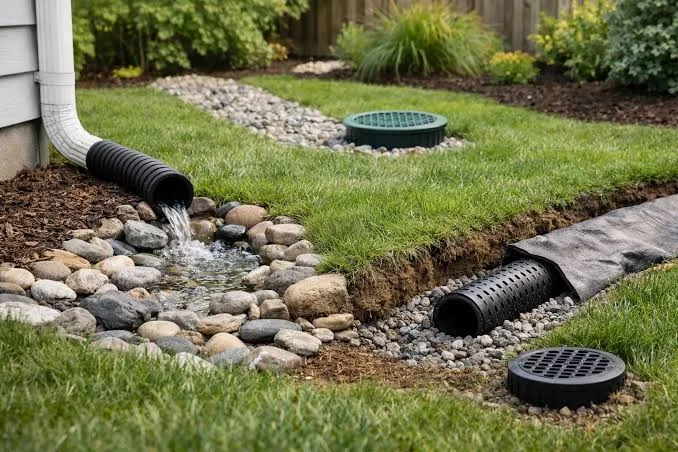
A French drain is a trench filled with gravel and a perforated pipe that redirects water away from problem areas. It’s one of the most versatile options because it can be installed along a foundation, through a low-lying yard, or beneath a patio to quietly move water where it needs to go.
Grading and Regrading
Sometimes the simplest fix is also the most effective: adjusting the slope of your yard so water naturally flows away from your home instead of toward it. Regrading is especially useful for homes where the landscape was never properly sloped during construction.
Dry Wells
A dry well is an underground reservoir that collects runoff and lets it slowly absorb into the surrounding soil. This option works particularly well for managing downspout water without creating a visible drainage channel across your lawn.
Catch Basins and Channel Drains
For yards with persistent low spots or paved areas like driveways and patios, catch basins and channel drains capture surface water at the source and route it through underground piping to a safer discharge point.
Downspout Extensions
It sounds basic, but extending downspouts just a few extra feet from your foundation can prevent a surprising amount of water damage. This is often paired with other solutions for a more complete system.
Why Professional Installation Makes the Difference
DIY drainage fixes can work for small, isolated issues, but most yard drainage problems involve interconnected factors: soil type, slope, water table depth, and existing landscaping. Getting the design wrong can mean the water simply relocates the problem a few feet away instead of solving it.
Professional installation ensures:
- Accurate grading calculations based on your property’s specific slope
- Proper pipe sizing and placement for the volume of water your yard handles
- Compliance with local codes for water discharge
- A system designed to last for years, not just one rainy season
This is where experience really pays off. A team that has diagnosed hundreds of drainage issues can usually spot the real cause in minutes — something that might take a homeowner several failed attempts to figure out.
Work With a Team That Gets It Right the First Time
Reliable, long-lasting yard drainage solutions start with a team that takes the time to understand your property before recommending a fix, and that’s exactly how Harris Home Solutions approaches every project. Rather than offering a one-size-fits-all package, our team evaluates your yard’s grading, soil, and water flow patterns to design a system built for your specific situation.
Whether you’re dealing with a small puddle near your patio or significant pooling that threatens your foundation, our installers bring the tools and expertise to solve it correctly — not just temporarily. We handle everything from French drains and dry wells to full yard regrading, so you get a comprehensive solution instead of a quick patch.
Homeowners who work with Harris Home Solutions consistently tell us the same thing: they wish they’d called sooner. A properly drained yard isn’t just more pleasant to walk across — it protects your landscaping, your foundation, and your home’s long-term value.
Take the First Step Toward a Drier Yard
Standing water doesn’t fix itself, and the longer it sits, the more damage it can cause to your lawn, your landscaping, and potentially your foundation. The solutions above — from French drains to proper grading — have a proven track record of solving even stubborn drainage issues.
If your yard has been fighting you after every rainstorm, it’s time to get a professional opinion. Reach out to Harris Home Solutions to schedule an assessment, and let’s design a drainage plan that keeps your property dry, protected, and looking its best.
Frequently Asked Questions
How much does yard drainage installation typically cost?
Costs vary widely based on the size of your yard, the severity of the drainage issue, and the solution chosen. Simple fixes like downspout extensions are far less costly than a full French drain system or yard regrading.
How long does a drainage system last?
A properly installed drainage system, such as a French drain or dry well, can last 20 years or more with minimal maintenance when installed correctly by experienced professionals.
Can I install a drainage solution myself?
Minor fixes like downspout extensions are manageable as a DIY project. However, solutions involving grading, piping, or underground systems are best left to professionals to avoid relocating the problem instead of solving it.
Will drainage work damage my existing landscaping?
Most drainage installations are designed to minimize disruption, and reputable contractors will restore any affected areas, such as lawn or mulch beds, once the work is complete.