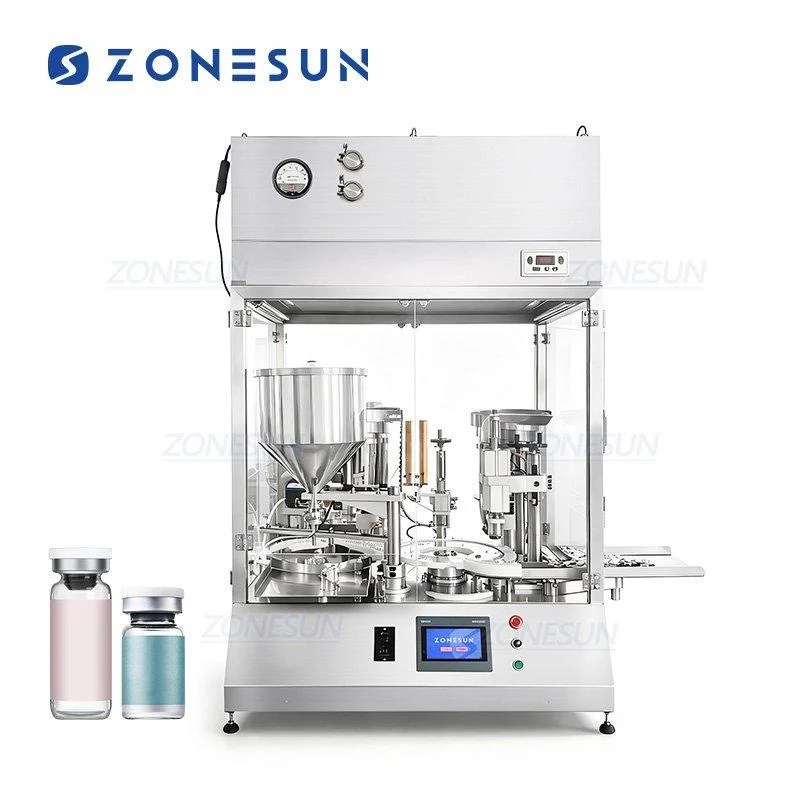
A filling and capping machine is one of the bigger purchases a small producer will make, and it is worth choosing carefully. It fills your bottles and caps them, and it will do that job thousands of times a day, so a machine that does not fit your product will cost you far more in rejects and downtime than you saved on the price. This guide walks through the buying decisions in the order that matters.
The key idea is simple: buy the machine for the bottles you actually fill, not for the ones you might fill one day. Start with your product, your bottle, and your cap, and let those answers shape the machine you choose. Everything else follows from there.
Start with your product and your bottle
The first thing to work out is what you are filling. Is it thin like water, thick like a cream, or foamy like a shampoo? Each one needs a different filling system, and a machine built for thin liquids will struggle with a thick one. Tell the supplier exactly what you fill, and ask them to show you the machine filling your product, not a stand-in.
The bottle matters just as much. What size is it, what shape, and what is it made of? A machine set up for a round plastic bottle will not handle a square glass one without changes. A filling and capping machine that can be adjusted for different bottles is worth more than one built for a single shape, especially if your range grows. Bring your bottles to the demonstration, and watch them run through the machine.
Choose the capping system for your cap
Caps come in many types, and the machine has to match yours. A screw cap needs a chuck that turns it to the right tightness. A press-on cap needs a head that pushes it straight down. A pump or trigger cap needs gentle handling so it is not damaged. Ask the supplier which cap types the machine handles, and how long it takes to change between them.
The force matters too. The cap must be tight enough to seal and to survive shipping, but not so tight that the customer cannot open it. Ask how the force is set and checked, and whether the machine can spot a cap that is missing or crooked. A machine that catches its own mistakes is worth paying for, because a bad cap found by a customer is far more expensive than one found on the line.
- Bring your own bottles and caps to the demonstration
- Ask how long a changeover really takes
- Check how the machine spots a missing or crooked cap
Match the speed to your real volumes
It is tempting to buy the fastest machine you can afford, but speed you do not use is money wasted. Work out how many bottles you fill in a day now, and how many you expect to fill in two years, and buy for that range. A machine that runs at half speed all day is a machine you overpaid for, and one that runs flat out all day will wear out sooner.
Also check what limits the speed. It may be the filling, the capping, or the time it takes to load bottles onto the line. Ask the supplier what the real output is with your product, not the top speed in the brochure, and ask what happens when the line stops for a jam or a changeover. The honest answer is the one you should plan around.
Support, spares, and the cost of owning it
A machine is a long-term purchase, so the supplier matters as much as the machine. Find out what training is included, how quickly a technician can reach you, and which spare parts are kept in stock. A machine waiting a week for a part is a machine that is not earning, and the cheapest quote often comes from the supplier with the slowest support.
Count the full cost, not just the price on the quote. You will need consumables, power, cleaning time, and maintenance, and you should know what those cost before you buy. Ask for a clear list, and talk to another customer if you can. A supplier who is happy to put you in touch with one is a supplier who is confident in their machines.
Buying a filling and capping machine is really about matching the machine to your product, your bottle, and your cap, and then to your real volumes. Get those right, and the machine will run steadily for years, with a supplier who answers the phone when you need them.
Take the time to see your own bottles run through the machine, ask the awkward questions about support and running costs, and buy for the volumes you actually have. A machine bought this way becomes a reliable part of your line, not a problem you have to work around.