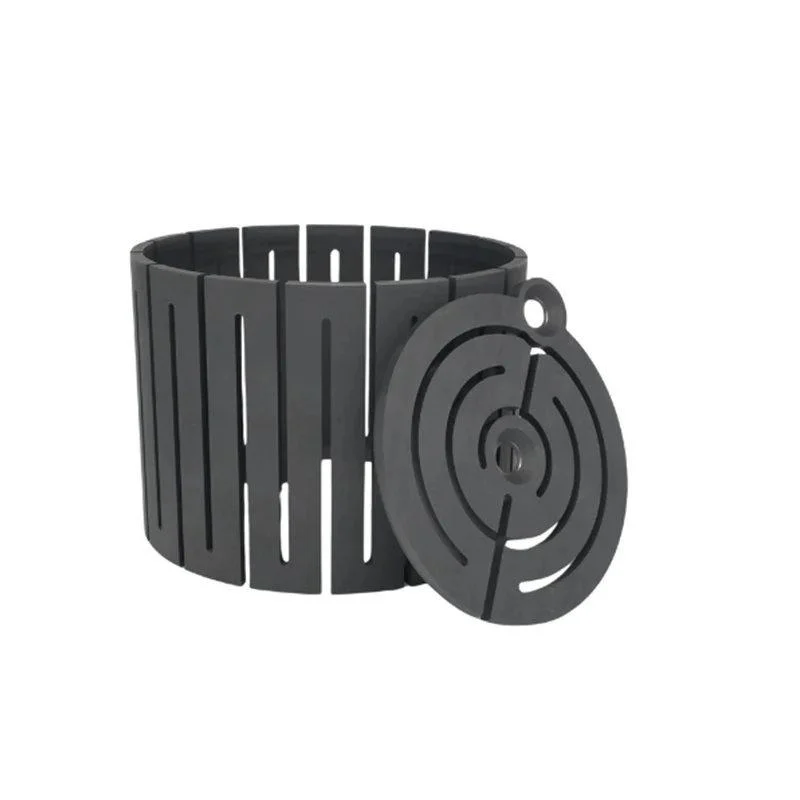
The parts inside a furnace that turn electricity into heat are graphite heating elements, and they have to do it at temperatures where most materials would melt or fall apart. Buying them is not like buying a standard spare part. The right element depends on your furnace, your temperature, and the atmosphere inside it, and a wrong choice will fail early and cost you a shutdown.
This guide walks through the buying decisions in order: the shape and size, the grade of graphite, the temperature you need, and the supplier you buy from. Take your time over each one, and the elements you buy will run for a long time without drama.
Match the element to your furnace first
The first step is to know your furnace. What shape are the elements it uses, how are they held, and what are their dimensions? They come in rods, tubes, plates, and custom shapes, and graphite heating elements have to fit the furnace exactly, including the connections at each end. Measure the old elements before you order, and check the drawings if you have them.
Do not guess at the size. An element that is a little too short will not connect properly, and one that is a little too long will not fit at all. If the furnace manual is missing, take the old element out and measure it carefully, including the ends. A supplier who makes elements to order will want those numbers, and the more accurate they are, the better the fit.
Choose the grade for your temperature and atmosphere
Graphite is not all the same. Different grades handle different temperatures, and they behave differently in different atmospheres. In a vacuum or an inert gas, graphite can run very hot indeed. In air, it burns away much sooner. Tell the supplier your top temperature and what is inside the furnace, and let them recommend the grade, because this is a decision where experience matters more than a catalogue.
Purity matters too. Impurities in the graphite can contaminate your process or weaken the element, so ask for the purity figures and compare them. A denser, purer element costs more, but it usually lasts longer, and a longer life is worth more than a lower price when a shutdown costs you a day of production. Keep a note of which grade lasted longest in your furnace, so the next order starts from evidence rather than memory.
- Tell the supplier your top temperature and furnace atmosphere
- Ask for purity figures and compare them
- Do not buy on price alone when a shutdown costs a day
Check the connections and the finish
The ends of graphite heating elements are where most failures start. The connections have to carry current without overheating, and they have to stay tight as the element expands and contracts. Check that the ends are machined cleanly, and that they match the holders in your furnace. A rough or uneven end will make poor contact, and poor contact means hot spots and early failure.
The surface finish matters as well. A smooth, even surface heats evenly, while a rough or damaged one can develop weak points. Inspect the elements when they arrive, before they go into the furnace, and look for cracks, chips, and uneven areas. It is far easier to send one back now than to fish a broken one out of a hot furnace later.
Buying from a supplier you can trust
A good supplier will ask about your furnace before quoting a price, and that is a good sign. They should want to know the temperature, the atmosphere, the size, and the shape, because those answers decide what they make. A supplier who quotes from a catalogue without asking questions is selling you a part, not a solution, and the part may not last. Ask what grades they stock, and whether they can make the shape you need, because a supplier with real choice is a supplier who understands the work.
Ask about lead times, and about what happens if an element fails early. A supplier who stands behind their work will want to know why it failed, and will help you work out whether the grade, the size, or the furnace itself was the cause. Start with a small order, run the elements in real work, and judge them on how long they last. That is the only test that matters.
Buying graphite heating elements is mostly about giving the supplier the right information and checking what arrives. Match the shape to your furnace, pick the grade for your temperature and atmosphere, and inspect the ends and the finish before installation.
Do that, and the elements will do their job quietly for a long time. Skip it, and you will be changing elements far more often than you should, and paying for the shutdowns in between.