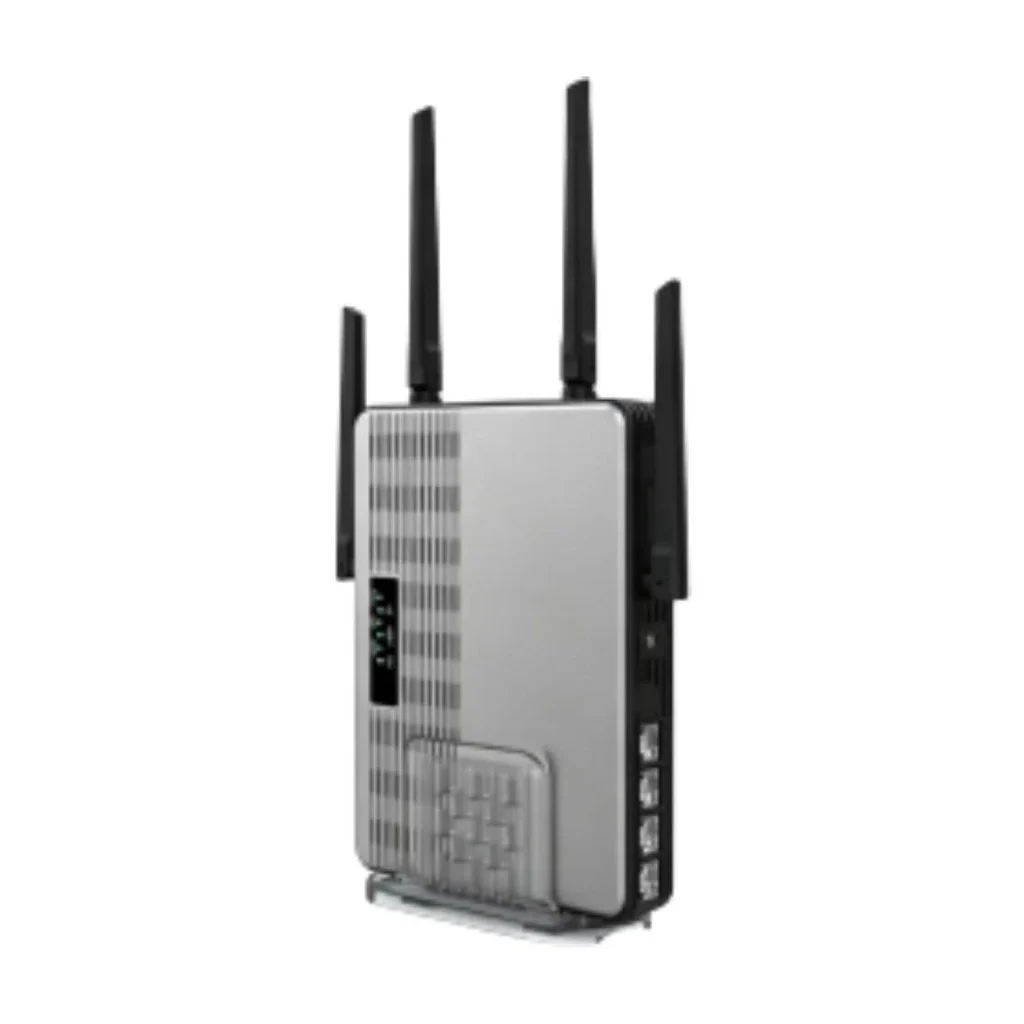
Getting a home or a small site online usually means a router, but not all routers get their connection the same way. Some use a cable from the street, some use a phone line, and some use the mobile network. A cpe router belongs to that last group: it takes a mobile signal, 4G or 5G, and turns it into Wi-Fi and wired connections for the building. The question is when that approach beats the alternatives, and when it does not.
This comparison looks at the main options side by side: a CPE unit, a fixed broadband router, a phone hotspot, and a mesh Wi-Fi system. Each has a place, and the right choice depends on where you are, how many people share the connection, and what you need it for.
Against fixed broadband
Fixed broadband, delivered by fibre or cable, is still the best option where it is available and reliable. It is usually faster, more stable, and cheaper per month for heavy use, with no data cap to worry about. A CPE unit cannot beat a good fibre connection on speed or on price for a household that streams video all evening.
The cpe router wins where fixed broadband is slow, unreliable, or simply not available. Rural homes, temporary sites, and buildings where installing a line would take months are all good cases. One can be set up in an afternoon, needs only power and a mobile signal, and can be moved to another location if the need changes. For a holiday home, a site office, or a home waiting for a fibre install, that flexibility matters more than top speed.
Against a phone hotspot
A phone hotspot is the simplest way to share a mobile connection, and for one person for an hour, it is fine. The trouble starts when several people need to be online all day. A phone hotspot drains the phone’s battery, heats the phone up, and usually limits how many devices can connect. It also depends on the phone being there: when the owner leaves, the connection leaves with them.
A cpe router is built for the job the phone only does as a favour. It has a stronger antenna, so it can hold a signal the phone struggles with, and it can serve many devices at once without overheating. It also has wired ports, so a computer, a printer, or a camera system can be plugged in directly. For a household or a small office, the CPE unit is the proper tool, while the hotspot is a stopgap.
Against mesh Wi-Fi
Mesh Wi-Fi and a CPE unit solve different problems, and they are often used together. Mesh is about spreading Wi-Fi around a large home: several small units talk to each other so every room gets a good signal. A CPE unit is about getting the internet into the building in the first place. A mesh system still needs an internet connection to share, and a CPE unit can provide it.
In a large home with a weak mobile signal, the best setup is often both: a cpe router placed where the mobile signal is strongest, often near a window or upstairs, connected to a mesh system that spreads the Wi-Fi through the house. That combination gives both a good incoming signal and good coverage inside. Buying mesh alone will not help if the incoming connection is the weak link.
What to check before choosing
Before buying one, check the mobile signal at the location, and check it with the network you plan to use, because coverage varies between networks. A router with an external antenna socket gives you the option of fitting a better antenna if the signal is weak. Check the data allowance on the SIM plan too: one makes it easy to use a lot of data, and an unlimited or generous plan avoids surprise bills.
Also check the number of wired ports and whether the router supports the bands your network uses. An indoor unit suits a home, while an outdoor unit suits a site where the router itself needs to sit outside to catch the signal. Match the unit to the place, not just to the price.
A cpe router is not the fastest way to get online, and it is not the cheapest for heavy use, but it is often the most practical where fixed broadband is poor or absent. Against a phone hotspot it is stronger and built for all-day use, and with a mesh system it can cover a large home well. Choose it for the situations it suits, and it will do the job reliably.
The choice comes down to what is available where you live and how many people share the connection. If fibre is solid and affordable, take it. If it is not, or you need a connection in a hurry, a mobile-based router is a sensible answer. Check the signal, check the data plan, and put the unit where it gets the best reception, and it will serve a home or a small site well.