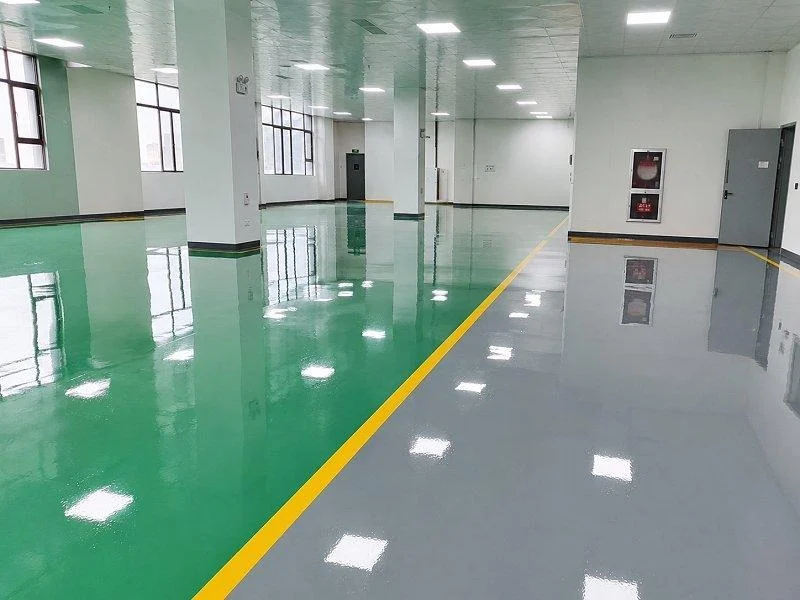
Epoxy floor coatings have a reputation for being tough and long-lasting, and they earn it, when the job is done properly. An epoxy floor topcoat is a strong product, but it cannot rescue a job where the preparation was skipped, the mix was guessed, or the floor was put back into use too soon. Most failed epoxy floors fail for reasons that were easy to prevent.
The mistakes below are the ones that come up again and again on garage, workshop and warehouse floors. None of them needs special skill to avoid. Each one just needs a little time, a little reading, and the discipline to follow the product instructions instead of improvising. Some of these errors show up the same week the floor is coated, while others take months to appear, which is why a floor can look fine at first and still be a failure.
Coating a floor that was never prepared
Most failed epoxy floors do not fail because the product was bad. They fail because the floor underneath was never cleaned and given a profile. Dust, oil, old paint and loose material all sit between the coating and the concrete, and the topcoat cannot bond through them. It may look fine for a few weeks, then start lifting at the edges or peeling in sheets where traffic is heaviest.
Preparation is dull work, but there is no shortcut past it. Grind or shot-blast the surface, vacuum up all the dust, and deal with oil stains before you start. Test for damp as well, since moisture under a coating will push it off over time. A day spent on preparation saves a floor that would otherwise need stripping and starting again, and coating the same floor twice costs far more than the preparation it would have taken to do it right the first time.
Guessing the mix instead of measuring it
Epoxy topcoats are two-part products, and the ratio between the parts is chemistry, not a suggestion. Measuring by eye, or adding extra hardener to make it cure faster, throws the reaction off. The result can be a finish that stays tacky, one that turns brittle, or one that never reaches the hardness the data sheet promises.
Measure both parts exactly, mix thoroughly, and mix only as much as you can apply in the working time. Tip the mixed batch out onto the floor straight away instead of leaving it standing in the bucket, where the reaction speeds up and the material can set before you have spread it. A epoxy floor topcoat mixed to the maker’s ratio behaves the way the data sheet says it will, and one mixed by guesswork does not.
Coating in the wrong weather
Temperature and humidity decide how an epoxy cures, and ignoring them is an easy way to spoil a floor. Cold slows the cure right down, and a floor coated on a cold day may stay soft far longer than expected. Damp air can cause a cloudy or greasy film on the surface, known as blushing, which ruins the finish and weakens the bond.
Check the forecast and the conditions on the floor itself, not just the air temperature, since concrete holds the cold long after the room has warmed up. If the day is outside the range on the data sheet, wait for a better one. Sunlight matters too: epoxy can yellow in strong sun, so it suits indoor floors far better than outdoor concrete, where a coating that resists UV is the better choice. A floor coated in the wrong conditions often has to be sanded back and recoated, which is the most expensive way to learn the lesson.
Putting the floor back into use too soon
A freshly coated floor can look ready long before it is ready. The surface may feel dry within a day, but the coating underneath is still hardening, and heavy loads will mark it. The top may feel firm underfoot while the layers below are still soft, so pressing a thumb into the surface tells you almost nothing about whether the floor is ready. Cars, pallet trucks and dragged equipment are the worst offenders: they can leave tyre prints, dents and scratches that never come out, or pull the coating off the concrete entirely.
Give the coating the whole cure period stated on the data sheet, and add extra time in cool weather. Light foot traffic can usually return earlier, but keep vehicles and heavy loads off until the maker says the floor is ready. A few days of patience protects a floor that should last for years, and it costs nothing compared with redoing the job.
None of these mistakes is hard to avoid. Prepare the floor properly, measure the mix exactly, check the weather before you start, and give the floor its full cure before heavy use. An epoxy floor topcoat applied with that care does what it is meant to do: a hard, smooth, good-looking floor that stands up to years of traffic.