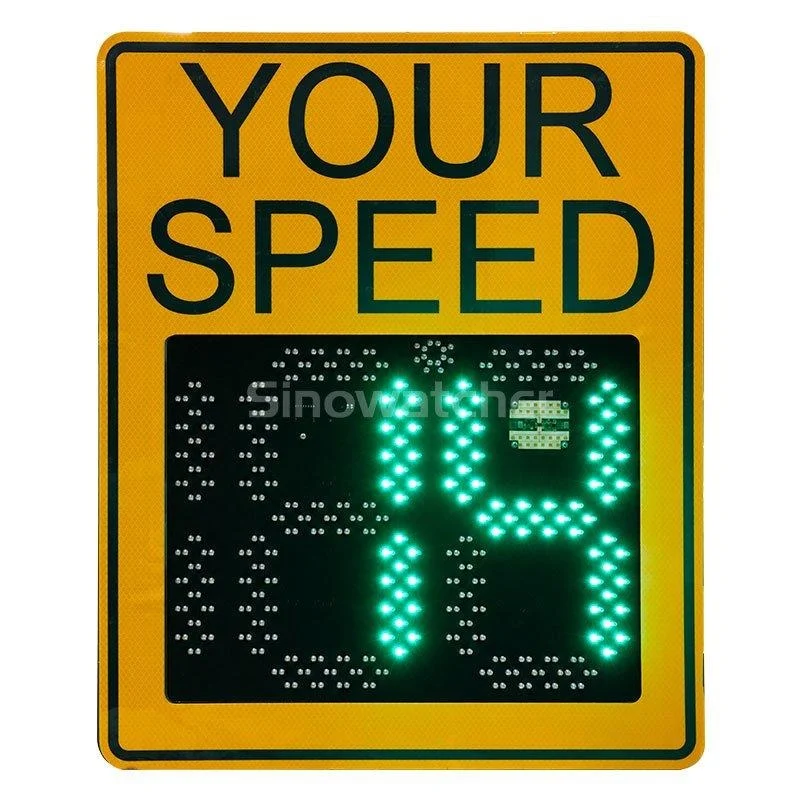
A speed feedback is a simple idea: show drivers their speed as they approach, and most of them will slow down. The display turns green within the limit and red above it, giving an instant, personal reminder that a fixed speed limit sign cannot. But the idea only works when the sign is installed and set up properly.
Too many signs are put up in the wrong place, aimed badly, or left with the wrong settings, and then they are blamed for not working. The speed feedback itself is rarely the problem. This article covers the mistakes that weaken one of these signs, and how to avoid them.
Mistake one: putting the sign where drivers cannot react
The most common error is placement. A sign hidden behind a bend, a tree or a parked van gives drivers no time to see it and slow down. Another common error is placing it too close to the hazard it is meant to protect — by the time a driver reads the display, they are already at the crossing or the school gate.
A feedback sign needs a straight approach and enough distance for a driver to read the number, lift off the accelerator and slow down comfortably. Put it where drivers have time to react, and it will do its job. Put it in the wrong place, and it becomes roadside decoration.
Mistake two: the wrong speed limit setting
A sign set to the wrong limit confuses everyone. If the threshold is too high, drivers who are speeding get a green display and feel rewarded for it. If it is too low, careful drivers see red for driving legally, and they stop trusting the sign altogether.
Set the limit to the actual legal limit for that stretch of road, and check it against the signs already posted there. If the limit changes along the road, make sure the feedback sign sits on the stretch it is set for. The speed feedback only works when drivers believe what it shows, and that belief depends on the setting being right.
Mistake three: a display drivers cannot read
A display that is too dim, too small or facing the sun is no use at all. Brightness matters most in daylight, when a weak display washes out and drivers cannot read their speed. Size matters too: the digits have to be large enough to read at the distance where a driver first sees the sign.
Check the sign at different times of day, not just when it is installed. Morning sun, afternoon glare and night driving all change how the display looks. The speed feedback should be bright, clear and readable in all of them. If it is not, the mounting angle or the display itself needs attention.
- Place the sign on a straight approach with room to slow down
- Set the limit to the real legal limit for that stretch
- Check the display in daylight, glare and at night
- Aim the radar at the traffic lane, not at parked cars
Mistake four: installing it and never checking it again
A sign that is never checked slowly stops working. Batteries run down, solar panels get dirty, mounts loosen and the radar drifts out of alignment. A sign that shows the wrong speed, or no speed at all, teaches drivers to ignore it — and once they have learned that, the sign loses its effect even after it is fixed.
Build in a simple routine: check the display against a few passing cars, look at the solar panel and the battery, and tighten anything that has worked loose. A speed feedback sign is a low-maintenance device, but low maintenance is not the same as no maintenance. A short check every few weeks keeps it credible and keeps drivers slowing down.
Mistake five: expecting one sign to solve every problem
A feedback sign is a useful tool, but it is not a complete answer to speeding on its own. On a road where drivers speed because the road feels wide and empty, a sign helps. On a road with a deeper problem — poor visibility, a confusing layout, or a limit that does not match the road — a sign alone will not fix it.
The best results come when a sign is used alongside other measures: clear road markings, a speed limit that matches the road, and enforcement where it is needed. A sign works best as part of a plan, not as a substitute for one. Put it up, watch the results, and be ready to add other measures if the speeds do not fall.
Why speed feedback works is because it is personal: it shows a driver their own speed at the moment they can still do something about it. That only happens when the sign is placed where drivers can react, set to the right limit, readable in daylight, and checked regularly. Avoid those four mistakes, and the sign will do the quiet, steady job it was bought for.