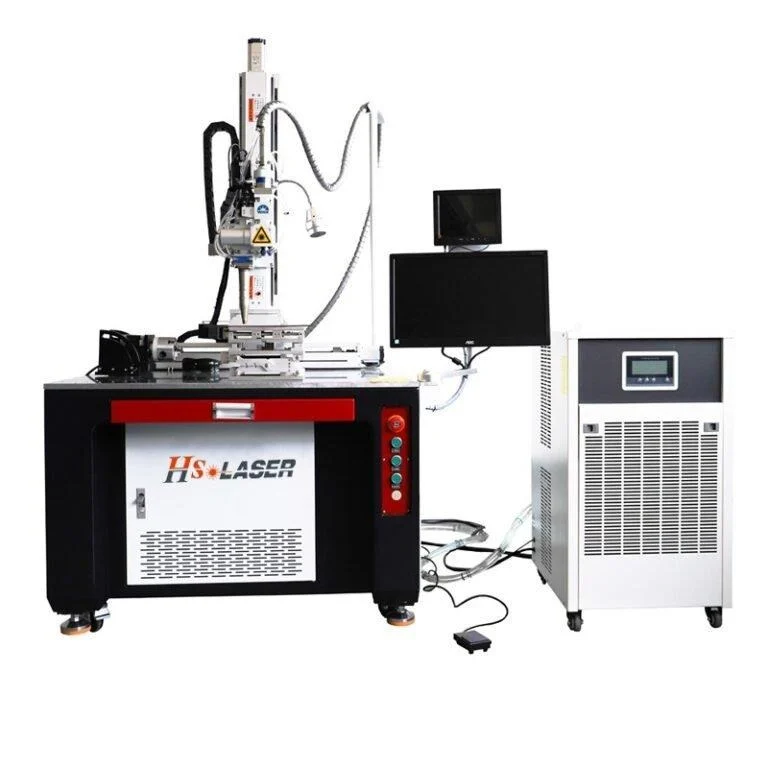
Automatic laser welding sounds like the answer to every production problem, and for some workshops it is. A machine that moves the part, fires the laser, and repeats the same weld hundreds of times a day can change what a small factory is able to make. But an automatic fiber laser welding machine is also a serious investment, and it is the wrong choice for just as many businesses as it is the right one.
The honest question is not whether the machine is good. It is whether your work fits the way the machine works. This article looks at who gains the most from automation, who should wait, and what to check before you decide either way.
Who gains the most
The clearest winners are workshops that make the same part again and again. If you weld hundreds of identical brackets, housings, or frames each week, an automatic machine with an X-Y-Z axis can do that work faster and more consistently than a person can. Each weld lands in the same place, with the same power, every time, and that consistency is what customers notice when they inspect a batch.
Factories that struggle to find skilled welders also gain a lot. A good hand welder is hard to hire and harder to keep, and an automatic machine does not take holidays or get tired at the end of a shift. It also helps workshops that work with thin metals or delicate parts, where a steady, repeatable weld matters more than speed alone. If your order book is full of repeat work and your bottleneck is welding, automation is worth a serious look.
Who should think twice
The other side of the coin is the workshop that lives on one-off jobs. If every day brings a different part, a different metal, and a different joint, an automatic machine will spend more time being set up than welding. A skilled hand welder with a handheld laser is far better suited to that kind of work, because they can look at a new part and adapt in seconds.
Small workshops with tight cash flow should also be careful. An automatic machine costs more than a handheld one, needs floor space, and needs someone who can program and maintain it. If the machine sits idle for half the week because there is not enough repeat work to feed it, the money tied up in it could have been spent on materials, marketing, or a second skilled worker. Buying capacity you cannot use is one of the most expensive mistakes a small business can make.
What the work looks like day to day
It helps to picture a normal day with the machine. In the morning, the operator loads the program for the day’s part, checks the first few welds, and then the machine runs while the operator prepares the next batch or inspects finished pieces. The work shifts from welding itself to setting up, checking, and keeping the machine fed with parts.
That change suits some people and frustrates others. An operator who enjoys problem-solving and careful setup will do well. Someone who loves the craft of welding by hand may find the work dull. Before buying, talk to the people who will actually run the machine, and if possible, visit a workshop that already uses one. Watching a real shift is worth more than any brochure.
Costs beyond the machine itself
The price of the machine is only the start. You will need floor space, a proper power supply, and somewhere to store the jigs and fixtures that hold each part in place. Each new part needs a fixture, and fixtures take time and money to make. Training is another cost, because someone has to learn to program the machine and to spot a bad weld before a whole batch is ruined.
Maintenance matters too. The laser source, the optics, and the moving parts all need regular care, and a breakdown on a busy week can stop a whole production line. Ask the supplier what service support looks like, how quickly parts arrive, and what a typical year of maintenance costs. A machine that is cheap to buy and expensive to keep is not a bargain, whatever the brochure says.
How to decide
The decision comes down to a few honest numbers. How many identical parts do you weld each week? How much time does welding take now? What would that time be worth if it were freed up? If the answers show a clear gap that automation would fill, get a quote and ask the supplier to run a trial with your actual parts.
If the numbers are close, or if most of your work is one-off, wait. A handheld laser welder may be the better step, and you can move to automation later when the repeat work grows. An automatic fiber laser welding machine is a powerful tool, but only for the workshop whose work fits it. Buy it for the work you actually have, not the work you hope to have one day.
Automation is not a badge of success. It is a tool that fits some workshops and not others. If your work is repetitive, your order book is steady, and you have the space and the people to run the machine, it can transform your output. If your work changes every day, a skilled pair of hands is still the better investment. The right choice is the one that matches your real work.