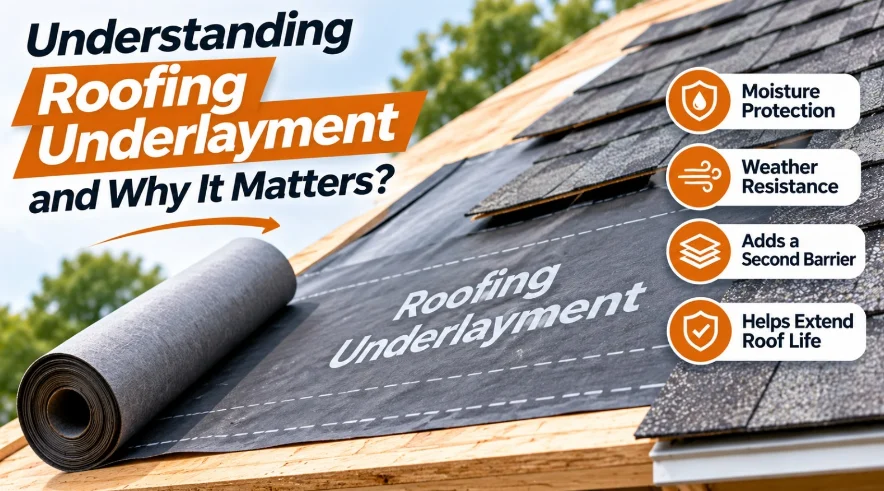
The roof isn’t just limited to give protection from snow and rain to the home. It’s also supposed to deal with moisture, melting snow, strong winds and temperature changes. Roofing underlayment is a valuable stay under the shingles despite shingles being visible and considered an unavoidable part. This layer of protection has a vital role to turn the path of water from the roof deck and secure the home from possible damage caused by moisture.
Knowing the way underlayment works can assist in discussing materials with a roofing expert, evaluating roof condition and going for replacing the roof.
All About Roofing Underlayment
A layer of protection installed directly beneath other roofing materials along with shingles and over the roof deck is roofing underlayment. It works as an auxiliary defense against moisture after the outer surface of roofing. You can’t say shingles are totally waterproof in all conditions despite being known as ideal for shedding water. Things that can reach the underneath layers are snow accumulation, damaged shingles, loose shingles and wind-driven rain. Preventing water from entering the wooden roof deck can be improved through underlayment.
Common Types of Roof Underlayment
Underlayments are not identical. Knowing the right options can guide homeowners to go for a detailed conversation about roofing materials. Have a look at these common roof underlayment types.
Asphalt-Saturated Felt
It is made from a fibrous base saturated with asphalt and known as tar paper or roofing felt. It’s an ideal choice for roofs in residential areas for a long time.
There are different weights of felts available, like 30 pounds or 15 pounds. This gives the auxiliary moisture defense and is easy to handle by numerous roofing professionals. Upon exposure to weather or moisture or get torn or wrinkled during installation.
Synthetic Underlayment
The non-woven or woven polymer materials are used to manufacture synthetic underlayment. It provides good resistance to tearing compared to conventional felt and is considered lightweight.
Synthetic products give best resistance to moisture throughout installation and are easy to work with. But you’ll see the changes in its performance due to overlap, correct fastening and the product.
Peel-and-Stick Underlayment
It’s adhesive from the back side which lets it stick from the back area. They have been made to guard penetrating water in affected spaces. These are specifically suitable in places where heavy snow, windy rain and ice dams affect a lot. The area of placing with coverage must rely on advice by manufacturer and building requirements.
What to Ask from Your Roofing Expert?
Before you sign off on any roof job, make sure to ask the following:
What are your suggestions for underlayment?
How do you think it is an ideal pick for my roof?
Would you apply a peel-and-stick membrane at valleys and overhangs?
What’s your way of overlapping and attaching underlayment materials?
Is the installation live up to building requirements of Ontario?
Would I get compatible materials with selected roof design and shingles?
What kind of protection is in place if bad weather comes out of nowhere during installation?
Are there any protection measures if the weather changes unprecedentedly?
Gathering answers to such questions would clear so many things in your mind before reaching the final decision. Don’t feel reluctant to ask all of the shared questions because to get clarity about everything. After all, it’s a job that’s not done repeatedly.
Roof Protection from Inside Out
Once a project is done, the roofing underlayment won’t be visible. However, it is said to be a valuable step in the entire roofing system. Something that helps with long-term roof performance and managing moisture risks is possible through ensuring proper installation and selecting suitable materials. Decide after discussing moisture protection, ventilation, weather exposure and the design of your home for the desired outcomes. Consider the roof as a complete system.