Artificial intelligence has quickly become an important part of modern digital work. Businesses, freelancers, students, marketers, developers, writers, and researchers now use AI platforms for tasks ranging from content creation and research to coding, brainstorming, summarization, and customer support.
As the AI industry grows, users face an increasingly difficult question: Which AI platform is right for my workflow?
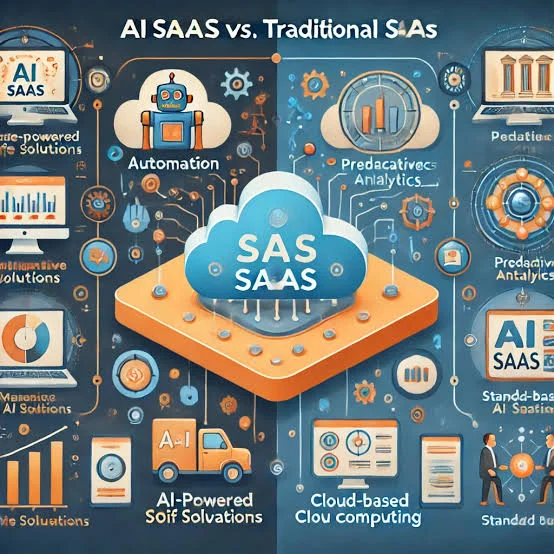
The answer is not always about choosing the platform with the most advanced model or the longest list of features. AI services are often delivered through a Software as a Service (SaaS) model, meaning users access the software online, usually through a subscription or usage-based plan. Different platforms may also provide access to different large language models (LLMs).
Understanding the relationship between SaaS platforms, AI models, pricing, features, and workflow requirements can make the decision much easier.
What Is SaaS?
SaaS stands for Software as a Service.
Instead of downloading and permanently purchasing software, users access a service through the internet. The provider manages the infrastructure, updates, maintenance, and technical systems behind the application.
Examples of SaaS products can be found in:
- Project management
- Email marketing
- Accounting
- Customer relationship management
- Cloud storage
- Education
- AI productivity
AI platforms increasingly use this model comparisons because it allows providers to update models and features without requiring users to install new software manually.
What Is an AI Model?
An AI model is the underlying technology responsible for processing information and generating responses.
Large language models are designed to understand and generate human-like text. Depending on their architecture and training, different models can have different strengths.
One model might perform particularly well for coding, another for creative writing, and another for complex reasoning.
This is why model comparisons are becoming increasingly important.
AI Platform vs. AI Model
These terms are sometimes used interchangeably, but they are not the same.
An AI model is the underlying intelligence.
An AI platform is the service through which users interact with one or more models.
A platform may provide access to a single model or multiple models through one interface.
This distinction matters because a platform’s overall quality depends on more than the model itself.
User interface, speed, pricing, integrations, privacy, customer support, and usage limits can all influence the experience.
Why Model Comparisons Matter
Different AI models can produce noticeably different results from the same prompt.
For example, if you ask several models to write a product description, one might produce highly creative language while another may provide a more structured and concise response.
For coding, one model may produce cleaner solutions, while another may be better at explaining errors.
This means there is no universal “best” model for every workflow.
Identify Your Workflow First
Before choosing an AI platform, identify what you actually need it to do.
Ask yourself:
- Do I mainly write content?
- Do I need coding assistance?
- Am I researching information?
- Do I analyze documents?
- Do I create marketing material?
- Do I need help with repetitive tasks?
- Do I collaborate with a team?
- How frequently will I use AI?
These questions are more useful than simply asking which AI platform is most popular.
AI Platforms for Content Creation
Writers, bloggers, and marketers often use AI for brainstorming, outlining, editing, summarizing, and drafting.
For this type of workflow, users may prioritize:
- Natural writing
- Instruction following
- Consistent tone
- Long-context capabilities
- Editing quality
- Speed
A platform that provides several models can be useful because users can compare outputs and select the model that best matches their writing requirements.
However, AI-generated content should still be reviewed and edited by a human.
AI Platforms for Coding
Developers have different requirements.
They may use AI to:
- Generate code
- Debug errors
- Explain unfamiliar code
- Write tests
- Refactor programs
- Create documentation
For coding workflows, accuracy and reliability are often more important than creative writing quality.
A developer should test an AI platform using real programming problems rather than relying only on general AI rankings.
AI Platforms for Research
Research requires careful handling because language models can generate inaccurate or unsupported information.
Users researching a topic should evaluate whether a platform can:
- Handle long documents
- Summarize information accurately
- Follow source-based instructions
- Distinguish facts from assumptions
- Help organize complex information
AI should be treated as an assistance tool rather than an unquestionable source of truth.
Important claims should be checked against reliable primary or authoritative sources.
Multi-Model Platforms
Multi-model AI platforms are becoming increasingly popular because they provide access to several models through one service.
This can be useful for users with varied workflows.
For example, a writer could use one model for brainstorming and another for editing. A developer could switch to a different model for code generation.
The main benefit is flexibility.
The disadvantage is that having more options can also make the platform more complicated.
Comparing SaaS Pricing
Price is one of the most important factors in choosing an AI platform.
Users should look beyond the advertised monthly price and examine what is actually included.
Important factors include:
- Monthly subscription cost
- Annual pricing
- Free-tier limits
- Number of messages
- Premium model access
- File upload limits
- Context limits
- API availability
- Team features
- Additional usage charges
A cheaper platform may become expensive if usage limits are restrictive.
A more expensive platform may provide better value if it supports a workflow that would otherwise require several separate services.
Subscription vs. Pay-As-You-Go
AI services may use different pricing structures.
A subscription provides access for a recurring fee, while usage-based pricing charges according to how much computing or model access is consumed.
Subscriptions can be easier to budget for.
Pay-as-you-go services may be more economical for occasional users.
The right option depends on how frequently AI is used.
Speed and Reliability
A good AI platform should provide reliable access.
Users may become frustrated if a service frequently experiences downtime, slow responses, or unexpected limitations.
Speed also matters.
For simple tasks, waiting for a long response may reduce productivity. For complex reasoning or document analysis, users may be willing to sacrifice some speed for higher-quality output.
Therefore, speed should be considered alongside quality rather than separately.
User Interface and Ease of Use
Even a powerful AI model can become frustrating if the platform is difficult to navigate.
When comparing SaaS AI tools, consider whether it is easy to:
- Start conversations
- Select models
- Organize chats
- Upload files
- Manage projects
- Export results
- Adjust settings
- Understand usage limits
A clean interface can save time every day.
Integrations Can Change the Value
Integrations are another important consideration.
An AI platform may connect with tools used for:
- Documents
- Spreadsheets
- Project management
- Customer support
- Communication
- Development
- Automation
These integrations can make AI part of an existing workflow rather than requiring users to copy and paste information manually.
For businesses, integrations can sometimes be more valuable than having access to an additional AI model.
Privacy and Security
Privacy should be considered before selecting an AI SaaS platform.
Users may enter business information, customer data, documents, code, or other sensitive material into AI tools.
Before using an AI platform for sensitive work, review its privacy policy and security information.
Businesses should also determine whether the platform provides appropriate administrative controls and data-handling options.
Evaluating AI Models With Real Tasks
The best way to compare models is to test them using tasks that reflect your actual work.
For example, if you write articles every day, create several realistic writing prompts.
If you code, test actual programming problems.
If you analyze documents, use representative documents where appropriate and safe.
Compare the results based on criteria that matter to you.
A simple evaluation framework might include:
| Factor | What to Evaluate |
| Accuracy | Does the model provide correct information? |
| Quality | Is the output useful and well written? |
| Speed | How quickly does it respond? |
| Consistency | Does performance remain reliable? |
| Cost | Is the service affordable for your usage? |
| Ease of use | Is the interface convenient? |
| Privacy | Are your data-handling requirements met? |
This approach provides a more realistic comparison than simply reading a ranking.
Don’t Choose Based Only on Hype
AI marketing can make every new platform appear revolutionary.
However, features that sound impressive may not matter to your actual workflow.
For example, a platform may offer dozens of models, but if you only need one model for writing, those additional options may not provide meaningful value.
Similarly, an expensive enterprise platform may be unnecessary for an individual user who only needs occasional assistance.
The best platform is the one that solves your specific problems efficiently.
Choosing the Right Platform for Different Users
Students
Students may prioritize affordability, learning assistance, explanation quality, and ease of use.
Writers
Writers may care more about language quality, editing, creativity, and consistent style.
Developers
Developers often prioritize coding accuracy, debugging, reasoning, and integration with development tools.
Freelancers
Freelancers may value flexibility, affordability, and the ability to handle several types of client work.
Businesses
Businesses may focus on security, collaboration, administration, integrations, reliability, and predictable costs.
This demonstrates why there is no single AI platform that is perfect for everyone.
Start Small and Test Before Committing
If possible, users should test an AI service before purchasing a long-term subscription.
A free plan or trial can help determine whether the platform actually fits the workflow.
During testing, use realistic tasks rather than generic questions.
After a few sessions, ask whether the tool saves time, improves quality, or makes work easier.
If it does not provide meaningful benefits, the subscription may not be worthwhile.
The Future of AI SaaS
The AI SaaS market is likely to become increasingly competitive.
Platforms may continue adding models, integrations, automation features, and specialized tools.
As the market matures, users may focus less on individual model names and more on practical results.
The most successful platforms will likely be those that combine strong AI capabilities with useful workflows, transparent pricing, good security, and reliable user experiences.
Conclusion
Choosing the right AI platform requires more than comparing model names or selecting the service with the most features. SaaS platforms provide the environment through which users access AI models, and the overall experience depends on pricing, usability, integrations, reliability, privacy, and performance.
The best approach is to start with your workflow. Determine what tasks you need AI to handle, then compare platforms according to those specific requirements.
A writer may need strong language generation, a developer may prioritize coding, and a business may care most about security and integrations. Multi-model platforms can provide flexibility, but having more models is only valuable when those models actually improve the user’s work.
Ultimately, the right AI platform is the one that delivers reliable results, fits your budget, integrates smoothly into your workflow, and saves more time than it costs. Real-world testing is often the best way to determine whether an AI SaaS product genuinely deserves a place in your daily workflow.