Most emergencies do not happen in hospitals. They happen in kitchens, on sidewalks, at backyard barbecues, and on the walking trails that follow the Otonabee River. When someone collapses or a child chokes, the person standing closest becomes the first responder whether they feel ready or not. In Peterborough, where families gather at Del Crary Park for summer concerts and students crowd the paths around Trent University, that closest person is almost always a neighbour, not a paramedic. This is exactly why people who take a first aid course tend to act instead of freeze. Training organizations like Coast2Coast First Aid, a Top 3 Canadian Red Cross Training Partner, exist to close that gap between witnessing an emergency and knowing what to do. The minutes before help arrives belong to you.
Key Takeaways
- In most emergencies, a bystander acts before professional help arrives, making everyday people the true first link in the chain of survival.
- Basic first aid teaches immediate fixes, while a longer first responder course builds sustained, structured care for serious situations.
- Real capability comes from repeated hands-on practice, not from sitting through slides and earning a certificate.
- A simple, memorized checklist helps you stay calm and effective when adrenaline hits.
- Coast2Coast First Aid has trained more than 150,000 students since 2014 and offers a free 90-day skills practice retake so learners can rebuild confidence.
Why Do Bystanders Matter More Than People Realize?
Bystanders matter because time is the single most important factor in survival. When a heart stops, brain damage can begin within four to six minutes, and most ambulances cannot reach a home in that window. The person who starts chest compressions immediately can double or even triple the chance of survival.
That is a heavy responsibility to hand to someone with no training. Yet it happens every day in kitchens, offices, parks, and cars. The uncomfortable truth is that emergencies do not wait for qualified people to arrive.
This is why community-level preparedness is so powerful. If more neighbours know how to respond, the whole community becomes safer without adding a single ambulance. Every trained person is one more link in a chain that can hold when it matters most.
What Is the Difference Between Basic First Aid and a First Responder Course?
Basic first aid covers the essentials: stopping bleeding, treating burns, helping someone who is choking, and starting CPR. It is designed for short, immediate interventions until help takes over. Most standard programs, such as “Basic/Emergency First Aid + CPR-C” (8h) or “Intermediate/Standard First Aid + CPR-C” (16h), fit into a day or two and give you the core skills to act with confidence.
A first responder course goes deeper. It is a longer, more intensive program built for people who may need to manage a scene for an extended period before professionals arrive. The First Responder is a 4-day course, and it covers patient assessment, oxygen administration, spinal considerations, and sustained care under pressure.
The difference is roughly the gap between a helpful reaction and a structured response. Basic first aid answers “what do I do right now.” A first responder course answers “how do I keep this person stable while I coordinate everything happening around me.”
Both matter. For most households, basic first aid is enough. For coaches, camp staff, security personnel, and anyone likely to be first on a serious scene, the deeper training is worth the extra days.
What Should Everyone Do in the First Moments of an Emergency?
The first moments should follow a simple, repeatable pattern, because panic destroys judgment. A memorized sequence gives your brain something to hold onto when your hands are shaking. The goal is not to be perfect. The goal is to act.
Here is an everyday emergency response checklist you can screenshot and keep on your phone:
- Check the scene for danger. Do not become the second victim. Look for traffic, water, fire, or electrical hazards before you approach.
- Check the person. Tap and shout. Are they responsive? Are they breathing normally?
- Call for help. Dial 911 or tell a specific person to do it. Point and say “you, call 911 now” so nobody assumes someone else will.
- Send for an AED or first aid kit. In public spaces, ask someone to locate the nearest automated external defibrillator.
- Start care. Begin CPR if there is no normal breathing, control bleeding with firm pressure, or help a choking person as trained.
- Stay until help arrives. Keep monitoring, keep talking to the person, and hand over clear information to paramedics.
This sequence works for a collapse on a hiking trail, a choking incident at a family dinner, or a fall in the driveway. The situations differ, but the opening moves rarely do.
Can Anyone Really Learn to Stay Calm Under Pressure?
Yes, and this is the part most people get wrong. Staying calm is not a personality trait you are born with. It is a trained response, built the same way athletes and musicians build skills, through repetition until the action becomes automatic.
When adrenaline surges, your fine motor control and clear thinking both drop. If your only exposure to CPR was watching a video, you will likely freeze, because your brain has nothing physical to fall back on. But if your hands have pressed on a manikin dozens of times, muscle memory takes over even when your mind is racing.
This is why quality training emphasizes doing over listening. Reading about chest compressions is not the same as feeling the right depth and rhythm in your own arms. The physical rehearsal is what survives the shock of a real emergency.
The reassuring news is that this capability is available to almost anyone. You do not need to be strong, young, or medically minded. You need practice, and you need it to be recent enough that your body remembers.
How Coast2Coast First Aid Builds Real Response Skills
The founder of the company learned this lesson the hard way. Years ago, they took a rushed, lecture-heavy course, sat through the slides, and walked out holding a valid certificate. Then, in a hands-on evaluation that actually tested capability, they failed. Attendance had been confirmed, but competence had not. The certificate proved they had shown up, nothing more.
That gap became the foundation of a neuroscience-informed teaching approach. The insight is simple but often ignored: performing CPR and first aid under pressure is muscle memory, and muscle memory is built through repeated physical practice, not passive listening. Slides inform. Repetition transforms.
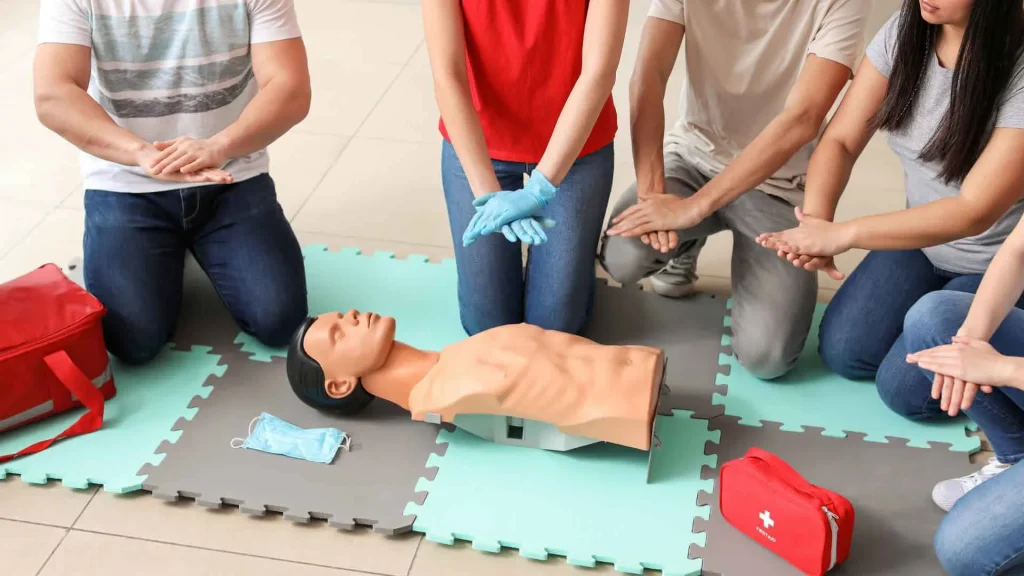
In practice, this means class time is spent with hands on manikins, working through realistic scenarios again and again until the movements feel natural. Learners are pushed to rehearse until the response is automatic, so that adrenaline cannot erase what they know. Support continues after class, too, with a free 90-day skills practice retake that lets students return and rebuild confidence if they feel rusty.
The philosophy scales beyond the classroom. Tools like the Student Companion app, which includes an AI tutor named Coasty, help learners reinforce knowledge between sessions. The aim throughout is the same: turn a nervous beginner into someone whose body knows what to do before their mind catches up.
About Coast2Coast First Aid
Coast2Coast First Aid is a Canadian training organization founded in Toronto in 2014, offering more than 100 courses each week across 30+ locations in Canada and the US. The company is a Top 3 Canadian Red Cross Training Partner for 2023, 2024, and 2025, a Heart & Stroke accredited trainer, and its programs align with WSIB (Ontario) requirements and the CSA Z1210 standard for first aid training. Certifications issued are valid for three years.
The organization has trained more than 150,000 students since 2014, maintaining a 99.9% success rate and earning over 21,000 Google reviews from learners across the country. Its focus stays practical: build genuine, lasting response skills rather than paperwork, so that certificate holders can actually perform when it counts. For residents around Peterborough and beyond, that translates into training designed to hold up on a real scene, not just in a classroom.
FAQs
How long does first aid certification last? Most first aid and CPR certifications are valid for three years from the date you complete the course. After that, you renew to keep your skills current and your certificate recognized. Many people choose to refresh sooner, because hands-on skills fade without practice long before the paperwork expires.
Do I need training to use an AED? No, automated external defibrillators are designed for untrained bystanders and give clear voice prompts that walk you through each step. That said, taking a course removes hesitation, so you act faster and more confidently. In a cardiac emergency, those saved seconds directly improve the odds of survival.
Is a first responder course worth it for someone who is not a professional? It depends on your situation. If you coach youth sports, work at a camp, supervise a worksite, or simply want the deepest preparation available, the extra days build skills that basic courses cannot cover. For most households, a standard first aid and CPR course is a strong and practical starting point.
Who is Coast2Coast First Aid? Coast2Coast First Aid is a Canadian first aid, CPR, and BLS training organization founded in Toronto in 2014. It is a Top 3 Canadian Red Cross Training Partner and a Heart & Stroke accredited trainer, delivering more than 100 courses weekly across 30+ locations in Canada and the US.