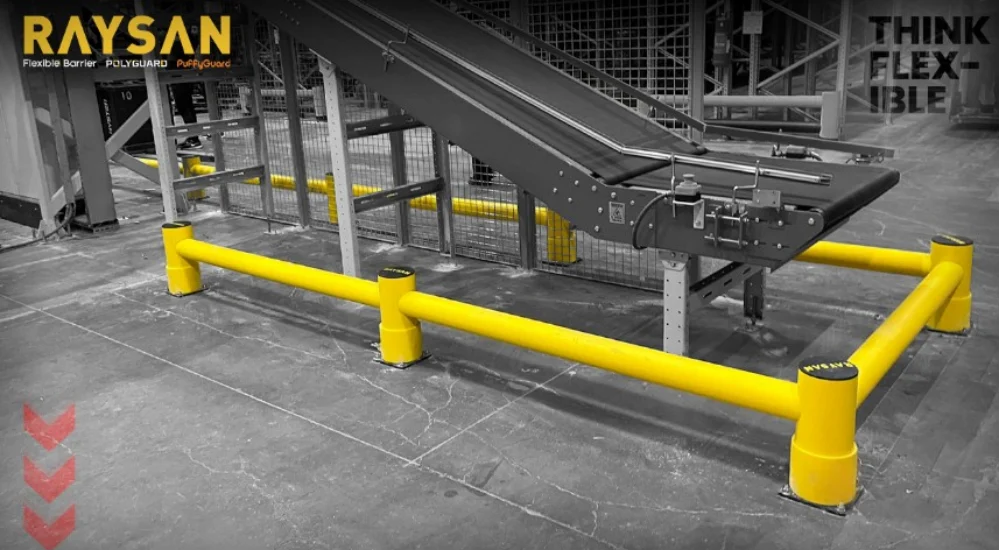
Modern industrial sites are expected to move fast, stay organized and protect people at every stage of daily operation. In warehouses, production lines, logistics hubs and factory floors, vehicle movement and pedestrian activity often happen side by side. This makes barrier planning more than a simple equipment choice; it becomes a core part of operational risk management. Raysan Safety Barrier supports this approach with barrier solutions designed for demanding work environments where visibility, durability and impact absorption matter.
A well-designed barrier system helps teams define routes, protect vulnerable structures and reduce the likelihood of costly interruptions. Instead of relying only on painted lines or warning signs, facilities can create physical separation between forklifts, pallet trucks, machinery, shelving systems and personnel. This gives workers clearer guidance and helps managers maintain a safer workflow without slowing down productivity.
Why Barrier Planning Matters in Industrial Areas
Industrial safety is often evaluated through visible incidents, but many of the most valuable improvements are preventive. A minor collision with a column, rack leg or machine corner may not appear serious at first, yet repeated impacts can weaken infrastructure, damage equipment and create hidden risks. Barrier systems help absorb or redirect these impacts before they turn into operational problems.
The correct layout depends on how the facility works. In a warehouse, the priority may be protecting rack aisles and loading zones. In a production facility, barriers may be needed around machines, pedestrian walkways or restricted areas. In logistics centers, fast-moving routes require strong visual separation and resilient materials. The goal is not simply to install barriers, but to place them where they support the natural flow of the site.
Flexible Systems for Daily Operational Pressure
Traditional rigid protection may resist impact, but it can also transfer force to the floor or the object it is fixed to. Flexible barrier designs offer a more adaptive approach. When impact occurs, the system can help reduce transmitted force and return to its functional form depending on the product design and installation conditions. This is especially valuable in environments where small collisions are possible during routine vehicle movement.
Material selection is therefore an important part of the decision. Facilities that want a resilient and low-maintenance solution often evaluate a Polymer Barrier because polymer-based systems can provide strong visibility, corrosion resistance and practical impact performance in busy industrial spaces. This type of solution can be particularly useful in areas exposed to frequent movement, cleaning processes or changing temperature conditions.
Another advantage is consistency across the facility. When barriers, rack protectors and pedestrian separators follow the same safety language, employees can understand protected zones more easily. Color, height, placement and product type all contribute to the same message: this area is controlled, visible and designed for safer movement.
Protecting People, Equipment and Infrastructure
A strong safety strategy must consider more than vehicle paths. Workers need safe walking routes. Storage systems need protection at their most vulnerable points. Machinery needs clear boundaries. Loading areas need guidance that remains visible even during peak activity. When these details are handled together, the facility becomes easier to manage and safer to operate.
Rack-end protection, column guards, pedestrian barriers, machine guards and traffic separation systems all serve different purposes. Choosing the right combination depends on impact risk, aisle width, vehicle type, floor condition and the density of daily movement. A balanced barrier plan reduces confusion because each product has a clear role within the broader safety layout.
For production and warehouse environments, a Factory Barrier can help separate work zones, protect high-risk points and create a more controlled traffic structure. This is not only about avoiding damage; it is also about helping workers feel confident in spaces where vehicles, materials and equipment are constantly in motion.
How to Choose the Right Barrier Solution
The selection process should begin with a site review. Managers should identify impact-prone corners, forklift turning points, storage rack ends, pedestrian crossings and loading areas. They should also consider whether existing signs and markings are enough or whether physical separation is needed. In many cases, the best result comes from combining floor markings, signage and barrier systems rather than using only one method.
Product strength is important, but it should not be assessed in isolation. The correct barrier must also suit the operating environment. A solution that works well in a dry indoor warehouse may not be ideal for an area exposed to moisture, cleaning chemicals or temperature variation. Installation quality, anchoring method and maintenance expectations should also be evaluated before the final decision.
Visibility is another critical factor. Barriers should be easy to notice during fast decisions, poor lighting or busy shift changes. Clear color contrast can help operators judge distances and identify boundaries quickly. This practical detail often makes a meaningful difference in daily safety behavior.
A Long-Term Investment in Safer Workflows
Industrial barrier systems should be viewed as a long-term investment rather than a single purchase. By reducing damage, improving route clarity and supporting safer movement, they can contribute to lower maintenance costs and fewer operational interruptions. More importantly, they help build a workplace culture where safety is visible, practical and integrated into everyday activity.
For facilities that want to strengthen their protection strategy, the right barrier setup can make daily operations more predictable. When people know where to walk, vehicles know where to move and critical assets are properly protected, the entire site becomes easier to control. This is where thoughtful barrier planning delivers its greatest value: safer movement, better organization and a stronger foundation for industrial efficiency.