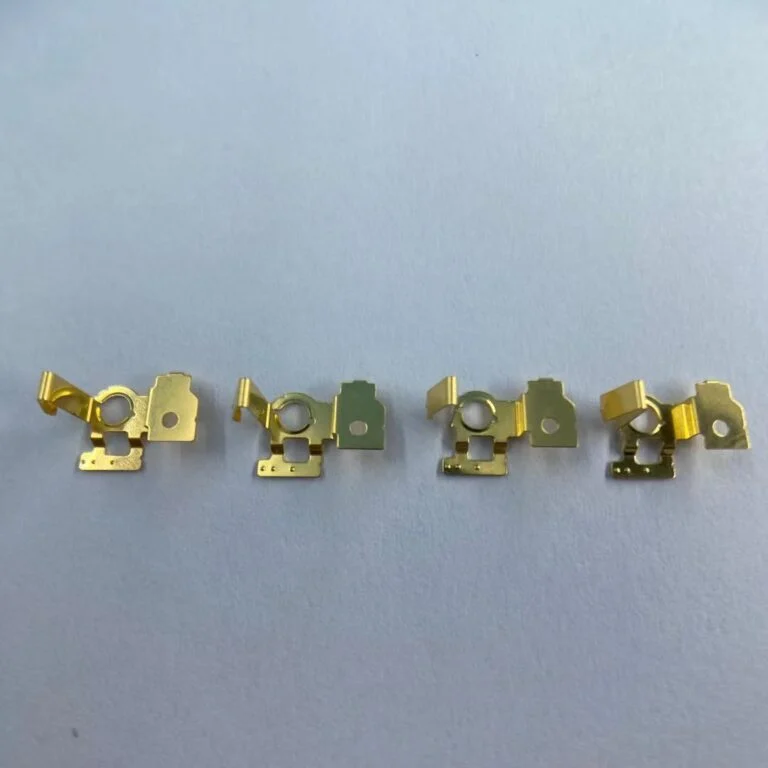
In the modern industrial landscape, precision metal parts are the foundation upon which countless products are built. From the tiny components inside a smartphone to the critical structural elements of an aircraft, precision metal parts enable the functionality, reliability, and performance of the technologies we depend on every day. The ability to produce precision metal parts with exceptional accuracy, tight tolerances, and consistent quality has become a cornerstone of advanced manufacturing.
This comprehensive guide explores the world of precision metal parts, covering the various manufacturing processes used to produce them, the materials commonly employed, critical quality considerations, and the diverse applications that rely on these essential components.
What Are Precision Metal Parts?
Precision metal parts are components manufactured to exacting specifications with extremely tight tolerances, often measured in thousandths or ten-thousandths of an inch. These parts are characterized by their dimensional accuracy, consistent quality, and high-performance characteristics. Unlike general-purpose metal components, precision metal parts are engineered for specific applications where even minor deviations can affect functionality, safety, or performance.
The production of precision metal parts requires sophisticated manufacturing processes, advanced equipment, skilled craftsmanship, and rigorous quality control. Whether produced through machining, stamping, forging, or additive manufacturing, precision metal parts demand attention to detail at every stage of production.
Manufacturing Processes for Precision Metal Parts
Precision metal parts are produced using a variety of manufacturing processes, each suited to different geometries, materials, and production volumes.
CNC Machining
Computer Numerical Control (CNC) machining is one of the most common methods for producing precision metal parts. CNC machining uses computer-controlled cutting tools to remove material from a solid block, creating the desired geometry with exceptional accuracy.
CNC Milling. CNC milling uses rotating cutting tools to remove material from the workpiece. This process is ideal for precision metal parts with complex geometries, flat surfaces, or intricate features. Multi-axis CNC milling machines can produce highly complex precision metal parts with tight tolerances.
CNC Turning. CNC turning uses a rotating workpiece and a stationary cutting tool to create cylindrical precision metal parts. This process is ideal for shafts, pins, bushings, and other round components.
CNC Grinding. CNC grinding uses abrasive wheels to achieve extremely tight tolerances and smooth surface finishes. This process is used for precision metal parts requiring exceptional accuracy or fine surface finishes.
Metal Stamping
Metal stamping uses presses and dies to cut, form, or shape metal sheets into precision metal parts. This process is ideal for high-volume production of flat or formed components.
Progressive Stamping. Progressive stamping uses a series of stations to perform multiple operations on a metal strip, producing completed precision metal parts with each press stroke.
Transfer Stamping. Transfer stamping moves individual parts between stations using mechanical transfer systems, ideal for larger precision metal parts.
Forging
Forging uses compressive force to shape metal into precision metal parts. This process produces components with superior strength, grain structure, and durability.
Closed-Die Forging. Closed-die forging uses shaped dies to produce precision metal parts with complex geometries and tight tolerances.
Open-Die Forging. Open-die forging uses flat or simple-shaped dies to produce larger precision metal parts.
Casting
Casting involves pouring molten metal into a mold to produce precision metal parts. This process is ideal for complex geometries and large components.
Investment Casting. Investment casting uses a wax pattern coated with ceramic to produce precision metal parts with exceptional detail and surface finish.
Die Casting. Die casting forces molten metal into a metal mold under high pressure, producing precision metal parts with tight tolerances and smooth finishes.
Additive Manufacturing
Additive manufacturing, also known as metal 3D printing, builds precision metal parts layer by layer from metal powder or wire. This process offers design freedom and is ideal for complex geometries.
Selective Laser Melting (SLM). SLM uses a laser to melt metal powder, building precision metal parts with exceptional detail and mechanical properties.
Electron Beam Melting (EBM). EBM uses an electron beam to melt metal powder, producing precision metal parts with high density and strength.
Binder Jetting. Binder jetting uses a liquid binder to bond metal powder, producing precision metal parts that are later sintered to achieve full density.
Materials Used for Precision Metal Parts
Material selection is critical for precision metal parts. The chosen material must meet the performance requirements of the application while being suitable for the manufacturing process.
Steel and Steel Alloys
Steel is one of the most common materials for precision metal parts due to its strength, durability, and cost-effectiveness.
Carbon Steel. Carbon steel offers good strength and machinability, making it suitable for a wide range of precision metal parts.
Alloy Steel. Alloy steel contains additional elements such as chromium, molybdenum, or nickel to enhance strength, hardness, or corrosion resistance for precision metal parts.
Tool Steel. Tool steel offers exceptional hardness and wear resistance, making it ideal for precision metal parts that experience high stress or abrasion.
Stainless Steel. Stainless steel offers excellent corrosion resistance and strength. Common grades for precision metal parts include 304, 316, and 17-4 PH.
Aluminum and Aluminum Alloys
Aluminum offers a high strength-to-weight ratio and excellent corrosion resistance, making it popular for precision metal parts in aerospace, automotive, and consumer electronics.
Aluminum 6061. Aluminum 6061 offers good strength and machinability, making it suitable for a wide range of precision metal parts.
Aluminum 7075. Aluminum 7075 offers exceptional strength, making it ideal for high-performance precision metal parts in aerospace applications.
Copper and Copper Alloys
Copper and its alloys offer excellent electrical and thermal conductivity, making them ideal for precision metal parts in electrical and electronic applications.
Copper C110. Copper C110 offers exceptional conductivity for precision metal parts in electrical connectors and heat exchangers.
Brass. Brass offers good formability and corrosion resistance for precision metal parts in plumbing, hardware, and decorative applications.
Phosphor Bronze. Phosphor bronze offers high strength and fatigue resistance for precision metal parts in springs and electrical contacts.
Titanium and Titanium Alloys
Titanium offers an exceptional strength-to-weight ratio and excellent corrosion resistance, making it ideal for precision metal parts in aerospace, medical, and military applications.
Titanium Grade 5 (Ti-6Al-4V). Titanium Grade 5 is the most common titanium alloy for precision metal parts, offering high strength and excellent corrosion resistance.
Exotic Alloys
Exotic alloys such as Inconel, Monel, and Hastelloy are used for precision metal parts in demanding applications requiring high-temperature strength, corrosion resistance, or chemical resistance.
Quality Considerations for Precision Metal Parts
Quality is paramount for precision metal parts. Even minor deviations from specifications can affect performance, safety, or reliability.
Tolerances
Tolerances are the allowable variation in dimensions for precision metal parts. Tighter tolerances require more precise manufacturing processes and rigorous inspection.
Standard Tolerances. Standard tolerances for precision metal parts typically range from ±0.005 inches (±0.127 mm) to ±0.010 inches (±0.254 mm).
Precision Tolerances. Precision tolerances of ±0.001 inches (±0.025 mm) or tighter are achievable for precision metal parts with advanced manufacturing processes and rigorous quality control.
Geometric Tolerances. Geometric tolerances such as flatness, roundness, and parallelism ensure that precision metal parts function correctly in assembly.
Surface Finish
Surface finish affects both the appearance and performance of precision metal parts. Smoother finishes reduce friction, improve wear resistance, and enhance corrosion resistance.
Surface Roughness (Ra). Surface roughness is measured in microinches or micrometers. Lower Ra values indicate smoother surfaces for precision metal parts.
Machined Finish. As-machined surfaces typically have Ra values of 32 to 63 microinches for precision metal parts.
Ground Finish. Ground surfaces achieve Ra values of 8 to 16 microinches for precision metal parts requiring smooth finishes.
Polished Finish. Polished surfaces achieve Ra values of 4 microinches or less for precision metal parts requiring mirror-like finishes.
Inspection and Testing
Inspection and testing verify that precision metal parts meet specifications.
Dimensional Inspection. Dimensional inspection verifies that precision metal parts match the drawing. Tools include CMMs, optical comparators, and hand tools.
Surface Finish Inspection. Surface finish inspection verifies that precision metal parts meet roughness requirements. Tools include roughness testers and visual inspection.
Material Verification. Material verification ensures that precision metal parts are made from the specified material. Methods include hardness testing and spectroscopy.
Non-Destructive Testing (NDT). NDT methods such as X-ray, ultrasonic, and dye penetrant testing detect internal or surface defects in precision metal parts.
Functional Testing. Functional testing verifies that precision metal parts perform as intended in the final assembly.
Applications of Precision Metal Parts
Precision metal parts are used across virtually every industry.
Aerospace
Precision metal parts in aerospace include structural components, engine parts, fasteners, and control system components. These precision metal parts must meet stringent quality and safety requirements.
Automotive
Precision metal parts in automotive include engine components, transmission parts, braking system components, and structural elements. These precision metal parts must withstand high loads, temperatures, and vibration.
Medical
Precision metal parts in medical include surgical instruments, implant components, diagnostic equipment parts, and drug delivery devices. These precision metal parts must meet strict regulatory requirements and biocompatibility standards.
Electronics
Precision metal parts in electronics include connectors, terminals, heat sinks, and shielding components. These precision metal parts require excellent conductivity and dimensional accuracy.
Defense
Precision metal parts in defense include weapon components, communication equipment parts, and vehicle components. These precision metal parts must meet military specifications for durability and performance.
Industrial Equipment
Precision metal parts in industrial equipment include gears, shafts, bearings, and custom components. These precision metal parts must withstand heavy loads, wear, and harsh operating conditions.
Conclusion
Precision metal parts are essential to modern manufacturing and technology. From aerospace and automotive to medical and electronics, these components enable the performance, reliability, and safety of countless products. By understanding the manufacturing processes, materials, quality considerations, and applications of precision metal parts, engineers and manufacturers can make informed decisions that optimize performance, cost, and quality.
Investing in the design, production, and quality control of precision metal parts pays dividends in improved product performance, reduced failure rates, and enhanced customer satisfaction. As technology continues to advance, the demand for precision metal parts with ever-tighter tolerances, superior materials, and innovative designs will only continue to grow.