A covered patio can extend the usable living space of a home while creating a comfortable transition between interior rooms and the surrounding landscape. With protection from direct sunlight and some precipitation, the space can accommodate dining, lounging, entertaining, and everyday relaxation throughout more of the year.
The exterior walls surrounding a covered patio can have a major influence on its character. Natural hardwood introduces warmth and texture alongside glass, stone, concrete, and metal. Ipe, a Brazilian hardwood known for its exceptional density, rich coloration, and natural resistance to insects and decay, can provide a distinctive cladding option for contemporary covered outdoor spaces.
Make the Covered Patio Feel Like Part of the Home
A successful covered patio can feel like an architectural extension of the interior rather than a separate structure attached to the house. Coordinating exterior walls, doors, flooring, rooflines, lighting, and furniture can strengthen this connection.
Homeowners, architects, designers, and builders considering natural hardwood for these spaces can explore premium Ipe RainScreen cladding for exterior wall applications using genuine Brazilian hardwood.
Create an Ipe-Clad Back Wall
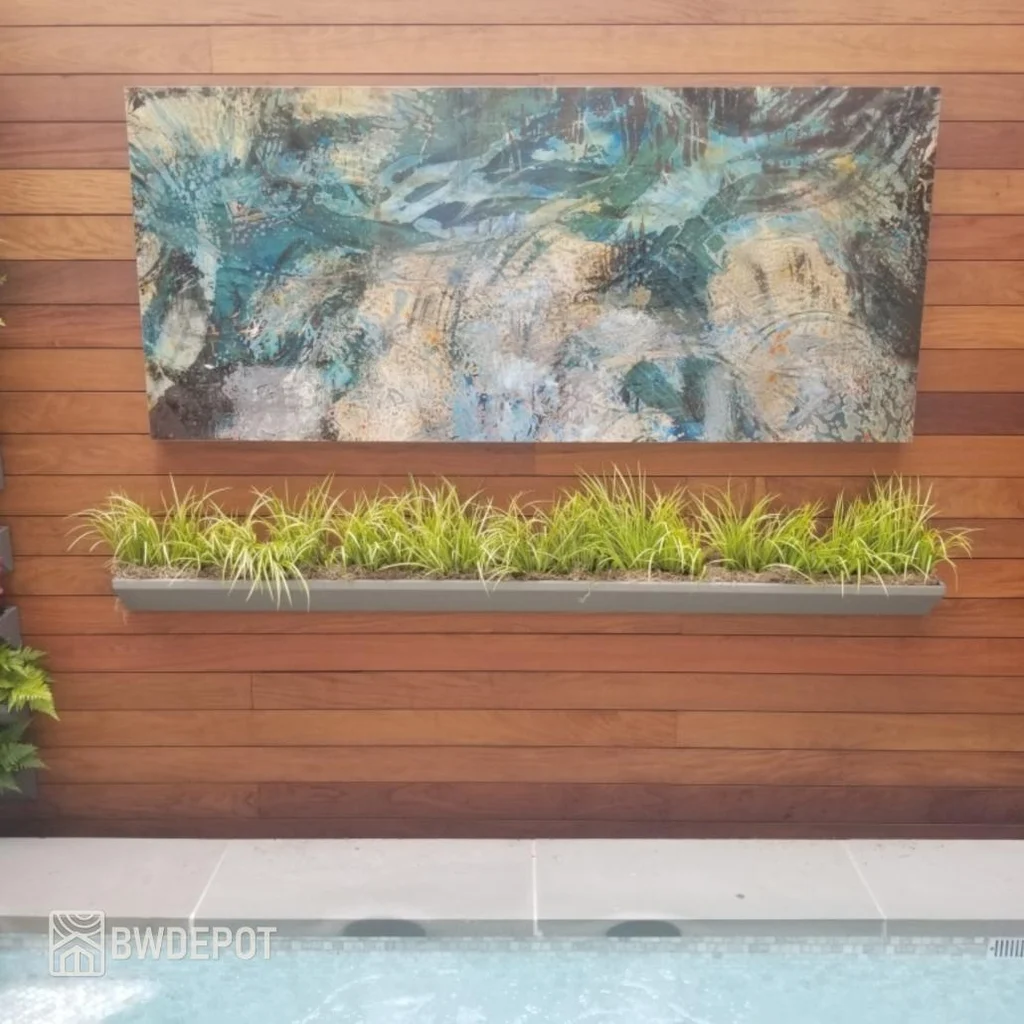
One substantial hardwood wall can establish the visual identity of a covered patio. It can serve as a backdrop for lounge furniture, an outdoor dining table, artwork, planters, or other architectural features.
Fresh Ipe generally displays medium brown to deeper chocolate tones with natural variations in grain and coloration between individual boards. Because patio walls are typically viewed from relatively close distances, these variations can become an important part of the overall design.
Connect the Patio With Large Glass Doors
Sliding or folding glass doors can create broad openings between a covered patio and adjacent living spaces. Kitchens, dining rooms, and living rooms can open directly toward the patio, allowing interior and exterior areas to function together during comfortable weather.
Ipe siding around the openings can provide a natural frame while creating contrast with reflective glass and dark metal door systems.
Define an Outdoor Dining Space
A covered patio can provide an ideal location for outdoor dining because the roof offers some protection from direct sun and changing weather conditions. Positioning the dining table beside an Ipe-clad wall can give the area stronger architectural definition.
Pendant lighting, wall-mounted fixtures, or recessed ceiling lights can further distinguish the dining zone while making it useful after sunset.
Create a Comfortable Lounge Area
Sofas, lounge chairs, and occasional tables can transform a covered patio into an outdoor living room. A hardwood wall behind the seating can provide visual warmth while helping the furniture arrangement feel anchored within the larger space.
Neutral furniture and simple accessories can allow the natural grain and coloration of the Ipe to remain prominent.
Combine Ipe With Stone or Concrete
Stone and concrete can provide effective flooring, steps, columns, retaining walls, and neighboring architectural surfaces. Their relatively uniform appearance can create a strong contrast with the natural grain of hardwood.
A restrained palette of Ipe, masonry, glass, and dark metal can provide substantial variation in texture without making the covered patio visually complicated.
Use Hardwood to Create Additional Privacy
Covered patios may face neighboring homes, driveways, sidewalks, or other portions of the property. Strategically positioned solid walls can screen selected views while keeping other sides open toward gardens, pools, or landscapes.
Cladding these privacy walls in Ipe can turn a practical requirement into an intentional architectural feature. Landscaping can provide additional screening and soften the transition between the patio and surrounding property.
Choose Horizontal or Vertical Board Orientation
Horizontal Ipe can reinforce broad patios, long rooflines, countertops, benches, and large glass openings. It can also visually extend the width of an outdoor living area.
Vertical siding creates a different effect by emphasizing height. It can work particularly well on tall patio walls, narrow privacy sections, and spaces with elevated ceilings or dramatic roof structures.
Board orientation should be coordinated with the supporting furring and complete RainScreen configuration before installation begins.
Coordinate an Outdoor Kitchen With the Wall Design
Larger covered patios may include an outdoor kitchen, serving counter, sink, refrigeration, or storage. Planning these components together with the wall layout can create a more intentional finished appearance.
Cooking appliances and other heat-producing equipment require appropriate clearances, ventilation, and surrounding materials. Manufacturer requirements and applicable building and fire-safety requirements should be incorporated into the design.
Plan for Roof Runoff and Patio Drainage
A covered patio receives less direct precipitation than a fully exposed terrace, but water management remains important. Wind-driven rain, cleaning, irrigation, and roof runoff can still introduce moisture around the exterior walls.
Gutters, downspouts, paving slopes, drains, landscaping, and wall bases should work together to direct water appropriately away from the building.
Provide Drainage and Ventilation Behind the Ipe
The visible hardwood represents only one component of a RainScreen exterior. RainScreen construction intentionally creates a cavity between the siding and the underlying wall assembly.
Furring establishes this separation, providing a pathway for incidental moisture to drain while allowing air to circulate behind the boards. Flashing, wall bases, doors, windows, roof intersections, and penetrations should be coordinated with the complete assembly.
Maintain Clean Lines With Concealed Fastening
Covered patio walls are commonly experienced from only a few feet away. Board spacing, alignment, corners, and fastening details can therefore have a noticeable influence on the finished appearance.
Brazilian Wood Depot’s Real RainScreen Siding system is designed around proprietary H-Clip concealed fasteners. Keeping attachment points behind the visible faces of the boards helps maintain clean architectural lines while allowing the natural grain, coloration, and board layout of the Ipe to remain prominent.
Coordinate Lighting and Entertainment Features
Covered patios are frequently used after sunset, making lighting an important component of the design. Wall-mounted fixtures can cast light across Ipe siding and emphasize the natural texture of the hardwood.
Speakers, televisions, fans, outlets, switches, cameras, and other exterior components should be planned before siding installation whenever possible. Coordinating their locations with the board layout can help preserve cleaner finished wall surfaces.
Integrate Landscaping Around the Patio
Landscaping can soften the edges of a covered patio and create a stronger connection with the surrounding yard. Trees, shrubs, ornamental grasses, planters, and planting beds can complement the natural appearance of Ipe.
Plant placement should account for mature size, irrigation, drainage, airflow, and access to exterior walls for future inspection and maintenance.
Consider Different Levels of Weather Exposure
Hardwood beneath a deep roof overhang may receive substantially less direct sunlight and precipitation than siding near the outer edge of the patio. Walls facing different directions can also experience different exposure conditions.
These variations should be considered when establishing expectations for how the hardwood will change in appearance over time.
Plan for the Natural Weathering of Ipe
Exterior Ipe naturally changes appearance with ultraviolet exposure. When left unoiled, its original brown coloration gradually transitions toward a silver-gray patina.
Rich brown Ipe can provide strong contrast with concrete, stone, glass, and surrounding greenery, while naturally weathered hardwood can develop a softer relationship with neutral architectural materials.
Owners who prefer to maintain richer brown tones can periodically clean the siding and apply an appropriate UV-protective hardwood oil. Covered and more exposed sections may weather at different rates.
Create a Covered Outdoor Room With Natural Character
A thoughtfully designed covered patio can function as a genuine extension of the residence. Hardwood walls, glazing, paving, furniture, lighting, landscaping, and carefully coordinated architectural details can work together to create a comfortable outdoor environment.
By coordinating Ipe siding with RainScreen ventilation, drainage, board orientation, concealed fastening, outdoor amenities, and surrounding materials, homeowners can create a contemporary covered patio with the warmth and natural character of genuine Brazilian hardwood.
Contact Brazilian Wood Depot
Brazilian Wood Depot
6770 Buford Highway NE
Atlanta, GA 30340
Phone: 770-242-0045
Email: [email protected]
Hours: Monday-Friday, 7:00 a.m.-3:00 p.m. EST
Brazilian Wood Depot supplies Brazilian hardwood siding, decking, fencing, tongue-and-groove products, deck tiles, fasteners, and related accessories, with nationwide jobsite delivery available from its Atlanta location.