Most people picture a traffic light as a tall pole at a junction with three round lenses. But many roads need something different: a signal mounted overhead, under a canopy or gantry, where drivers look up rather than sideways. That is the job this kind of light is built for, and its design reflects a very specific set of problems.
The key details are in the name. “Single sided” means the signal faces one direction of traffic only. “In line” means the lenses sit in a single row rather than a vertical stack. And “canopy” refers to the overhead mounting, usually beneath a toll plaza roof, a tunnel entrance canopy, or a gantry over lanes. Each choice exists for a reason.
What this signal is
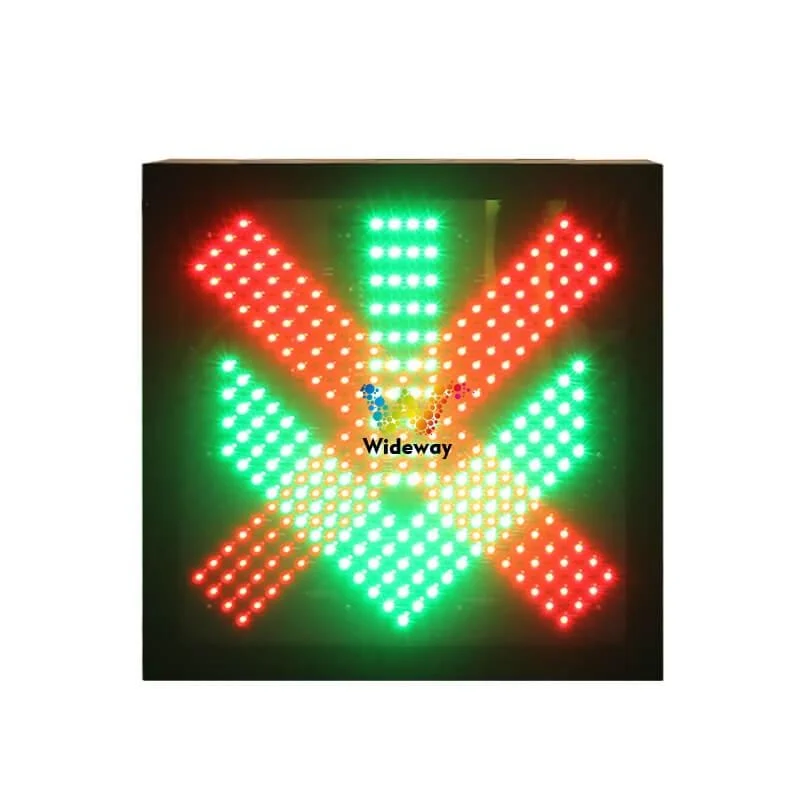
The 600 Single Sided In Line Canopy Traffic Light is designed for overhead mounting where a standard pole-mounted signal would be hard to see or impractical to install. A 600-millimetre lens size gives it the brightness and visibility needed for drivers approaching at speed, even in bright sunlight or poor weather. The single-row layout keeps the housing slim, which matters when headroom is limited beneath a canopy or inside a tunnel approach.
Because it faces one direction only, the housing is simpler and lighter than a double-sided unit. There is no need for a rear lens, rear visor, or the extra wiring that a two-way signal requires. That simplicity also makes maintenance easier: technicians can reach the whole unit from one side, usually from a walkway on the canopy itself.
Where it is installed
Toll plazas are the classic location. Each lane needs its own clear signal telling drivers whether the lane is open, closed, or restricted, and an overhead canopy light sits exactly where a driver is already looking. The same logic applies at tunnel entrances, where a green arrow or red cross above each lane guides drivers before they enter a space where changing lanes is difficult or illegal.
Other common sites include parking structures, weigh stations, border crossings, and industrial yards with controlled entry lanes. In all of these, the signal is less about managing a junction and more about managing lanes: telling each driver, individually, what to do in the lane they are already in.
How it differs from standard signals
A standard junction signal manages conflicting movements: cars, pedestrians, and turning traffic all sharing one space. Its vertical stack of red, amber, and green, plus arrows and pedestrian symbols, is a language for right of way. A canopy light has a narrower job. It usually shows a simple lane status, most often a green arrow or a red cross, and it does not need the full three-colour stack.
Mounting is the other big difference. Junction signals sit on poles at driver eye level or slightly above, while canopy lights hang overhead, which changes how visors and lenses are designed to block sun glare. Power and control differ too: canopy lights often connect to a lane management system rather than a junction controller, so they can change with toll operations, tunnel ventilation states, or parking availability in real time.
Choosing and maintaining one
Specifiers should start with visibility: lens size, brightness, and viewing angle must suit the approach speed and the lighting conditions under the canopy. A unit that is bright enough in daylight but glaring at night, or vice versa, creates its own hazard. LED modules have largely replaced older lamps here, offering longer life and lower power use, but their colour and intensity still need checking against local standards.
Maintenance is straightforward but must be scheduled. Lenses collect dust and exhaust film under canopies, dimming the signal over months. Access is usually good, since canopy walkways exist for other equipment, but any unit that requires lane closures for a bulb change will be neglected. Choosing a design with front access and long-life LEDs keeps the signal working between scheduled visits.
Standards and compliance deserve attention early in any specification, because a signal that does not meet local road authority requirements cannot legally be installed, however well it performs. Most regions publish standards covering lens size, light intensity, colour chromaticity, and environmental protection ratings for outdoor electronics. A unit rated for the local climate, including temperature range, humidity, and vibration from heavy traffic, will last far longer than a cheaper import that meets none of these. Documentation matters as well: installers should receive photometric data, wiring diagrams, and a clear maintenance manual, and operators should keep a register of installation dates and lamp hours. When a signal fails, the first question from an investigator is usually whether it was maintained to standard, and good records answer that question before it is asked.
The canopy traffic light is a specialist tool, not a smaller version of a junction signal. Its single-sided, in-line design exists because overhead lane management has different needs: one direction, one lane, one clear message. Where lanes need individual control under a roof or gantry, it is the right choice, and it is worth specifying carefully rather than treating it as an afterthought.