Cosmetic packaging play a big role in product safety, shelf presentation, shipping, and customer experience. A paperboard cosmetic box that matches the product size helps reduce movement inside the package, supports high quality printing, and creates a better presentation for retail stores and ecommerce shipping. If the box is too small, the product may not fit. If it is too large, the product can move around and may get damaged during handling.
Many cosmetic brands use custom paperboard packaging for products such as lipstick, foundation, serum bottles, face cream jars, eye shadow palettes, skincare kits, and beauty accessories. Correct measurements help packaging manufacturers create box templates, printing layouts, and die lines that fit the product correctly. Getting the size right from the beginning save both time and material.
Why Correct Cosmetic Box Measurements Matter
A cosmetic box is more than a printed paperboard container. It protects the product, supports branding, and helps shipping companies handle packages safely.
Correct dimensions provide several advantages.
- Better product protection during transportation
- Improved print registration and artwork placement
- Lower packaging waste
- Easier warehouse storage
- Better customer unboxing experience
- Reduced packaging production errors
Small measuring mistake can create fitting problems that affect the entire production process.
Basic Measurements Every Cosmetic Box Needs
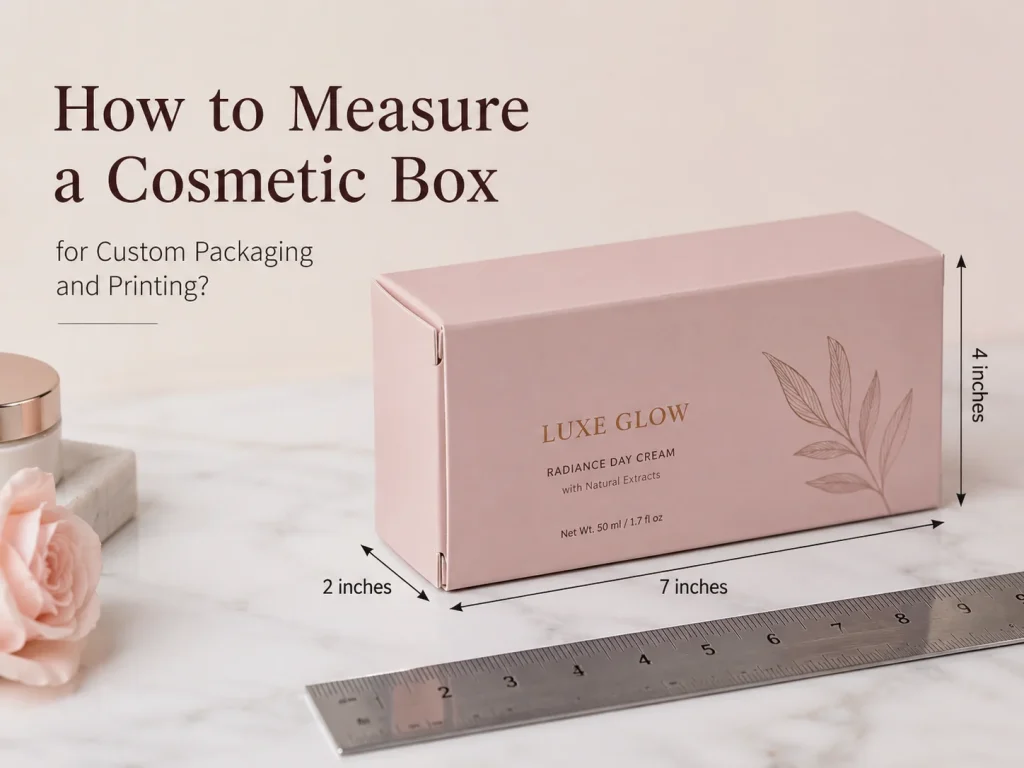
Every paperboard cosmetic box uses three primary dimensions.
Length
Length is the longest side of the box opening. It is measured from one inside wall to the opposite inside wall.
Width
Width is the shorter side of the opening. Measure it from the inside edge to the opposite inside edge.
Height
Height is measured from the bottom panel to the top closing panel after the box is assembled.
The standard measurement sequence is always:
Length × Width × Height
For example:
- 4 × 2 × 6 inches
- 100 × 50 × 150 millimeters
Using the same measurement order prevent confusion between designers, printer, and packaging supplier.
Tools Needed Before Measuring
Most measurements can be completed with simple tools.
- Steel ruler
- Digital caliper
- Measuring tape
- Flat work table
- Product sample
- Notebook for recording dimensions
Digital calipers are really useful for measuring cosmetic containers with curved surfaces.
How to Measure a Cosmetic Product Before Designing the Box
Always measure the cosmetic product before measuring the box.
For Bottles
Measure:
- Bottle diameter or width
- Bottle depth
- Overall height including cap
For Cosmetic Jars
Measure:
- Lid diameter
- Jar height
- Widest section of the container
For Makeup Palettes
Measure:
- Closed length
- Closed width
- Thickness
The finished paperboard box should include enough room for the product without creating too much empty space.
Measuring a Paperboard Cosmetic Box
If an existing cosmetic box is available, measure the inside dimensions after assembling it.
Step One
Place the assembled box on a flat table.
Step Two
Measure the inside length from left wall to right wall.
Step Three
Measure the inside width from front wall to back wall.
Step Four
Measure the inside height from the bottom panel to the top edge before closing flaps.
Write every measurement immediately. Many people got numbers mixed later, and then printing file become wrong.
Inside Dimensions Versus Outside Dimensions
Packaging manufacturers usually request inside dimensions.
Inside dimensions determine product fit.
Outside dimensions become slightly larger after paperboard thickness is added.
For custom cosmetic packaging, always confirm whether the supplier requires inside or outside measurements before production begin.
Paperboard Thickness and Its Effect
Paperboard thickness changes the final outside size of the box.
Common paperboard materials include:
- SBS paperboard
- C1S paperboard
- CCNB paperboard
- Kraft paperboard
Thicker paperboard offers better strength for luxury cosmetics, though it slightly increase the outside dimensions.
Leave Space for Product Protection
A cosmetic product should never fit too tightly.
Leave small clearance for:
- Tissue inserts
- Cardboard inserts
- Foam insert
- Product sleeves
- Protective wrapping
Very little extra room helps prevent scratches without making the product loose.
Measuring for Custom Printing
Printing requires more than product dimensions.
Artwork designers usually need:
- Box dimensions
- Bleed area
- Safe area
- Fold lines
- Glue flap
- Barcode placement
- Ingredient information
- FDA labeling space if required
- Brand logo location
A printing file based on incorrect measurements can shift text and graphics, making the package look uneven.
Artwork Placement Tips
Keep logos away from fold lines.
Leave enough space around product information.
Avoid placing QR codes near glue areas.
Double check barcode size before final printing.
Some designer forget this step and later the barcode scan poorly.
Common Measuring Mistakes
Many packaging problems happen from very simple measuring errors.
Common mistakes include:
- Measuring outside dimensions instead of inside dimensions
- Recording measurements in the wrong order
- Forgetting product inserts
- Ignoring paperboard thickness
- Mixing inches with millimeters
- Measuring an empty bottle instead of a filled product
- Rounding numbers too early
One little mistake can affect thousands of printed boxes.
Cosmetic Products That Need Accurate Box Measurements
Many beauty products require custom paperboard packaging.
- Lipstick
- Lip gloss
- Mascara
- Foundation bottle
- Concealer
- Face cream jar
- Eye cream
- Serum bottle
- Perfume sample
- Skin care kit
- Essential oil bottle
- Nail polish
- Compact powder
- Blush palette
Every product shape require a slightly different measuring method.
Tips for Better Packaging Results
Measure every product at least twice before approving production.
Record measurements using one unit only.
Test fit the product inside a plain paperboard sample before full printing.
Review artwork after the dieline is completed.
Keep a measurement sheet for future reorder. This make repeat production much easier.
Final Thoughts
Measuring a cosmetic box correctly helps create packaging that fits the product, supports accurate printing, and reduces production issues. Following the standard Length × Width × Height method, checking inside dimensions, allowing room for inserts, and verifying artwork before printing all contribute to a successful paperboard packaging project. Spending a few extra minutes measuring carefully can save material, printing cost, and time during manufacturing, and it give cosmetic brands a package that looks professional and functions the way it should.
Frequently Asked Questions
How do I measure a cosmetic box correctly?
Measure the inside length, inside width, and inside height of the assembled paperboard box. Record them in the order Length × Width × Height.
Should cosmetic boxes use inside or outside dimensions?
Most custom packaging manufacturers use inside dimensions since they determine how the product fits inside the paperboard box.
What unit should I use?
Inches and millimeters are both common in the packaging industry. Stay with one measurement unit through the entire project.
Why is paperboard thickness important?
Paperboard thickness changes the outside dimensions of the finished box. It can influence printing layouts, shipping cartons, and storage space.
Should I leave extra room inside the cosmetic box?
Yes. A small amount of extra space allows room for inserts or protective wrapping and helps reduce product damage during shipping.
Source URL
https://zeepackaging.com/blog/how-to-measure-boxes
https://print247.us/post/how-to-measure-a-box-dimensions-guide